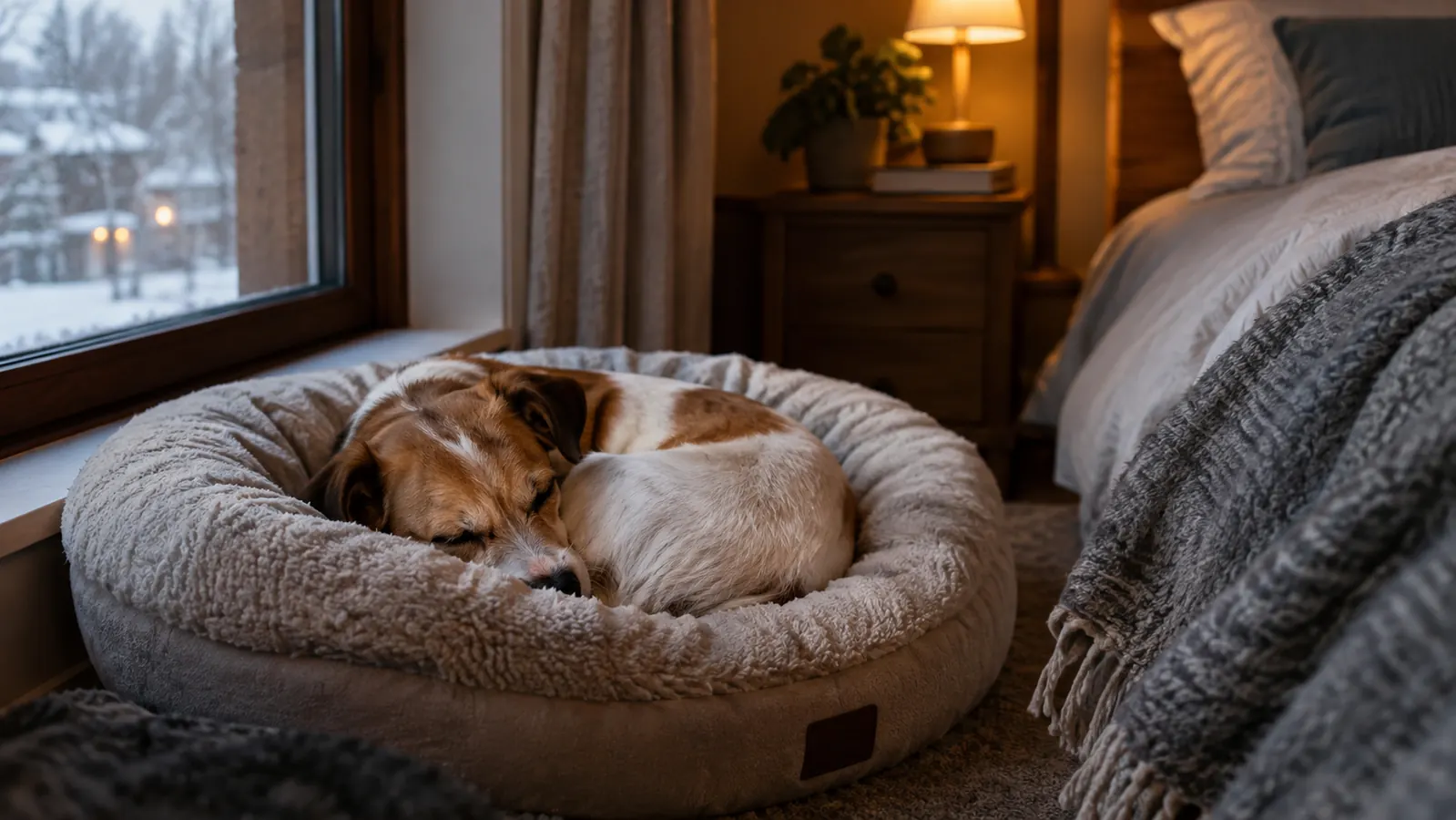
Every cold night before the onesie, I woke up at least twice to the sound of Pip shivering in his bed. He is an Italian Greyhound, about 13 pounds, with a thin short coat and almost no body fat, and Flagstaff nights in January sit well below freezing. I tried extra blankets. I tried a heated pad. I tried moving his bed next to the heat vent. He would settle for an hour, then the shivering would start again, and by morning all three of us were exhausted. It took me until early January to figure out the piece I had been missing: warmth that stays on him when he turns over. That is what finally let him sleep warm. The Spark Paws Stretch Onesie became part of that routine, and this is the exact order of things that worked for us.
I want to be plain about something before I go any further. A dog who is genuinely cold at night is not being dramatic, and he is not trying to be difficult. He is trying to tell you something, and the fix is usually simpler than you expect. If you have a thin-coated dog who paces, curls into a tight ball, or wakes you with little whimpers in the small hours, here is the exact order of things that worked for us, plus the one product that made the biggest difference.
The one layer that finally got Pip through the night
After trying extra blankets, a heated pad, and a warmer room, the thing that worked was a stretchy onesie that stays on him when he moves. The Spark Paws Stretch Onesie is what Pip has slept in every cold night since early January, and it is the reason I stopped waking up to the sound of him shivering.
Amazon Check Today's Price on Amazon →Step 1: Warm the room first, then add the layer
Before I bought anything, I moved Pip's sleeping setup into the warmest room in the house and closed the door. Our bedroom stays warmer than the hallway, and closing the door kept the heat where we needed it. I also moved his bed a few inches away from the exterior wall, because that wall is noticeably colder to the touch on freezing nights. One night in early December I held the back of my hand against that wall and it was cold enough that I understood why Pip kept turning away from it in his sleep. This cost nothing, and it cut down the amount of extra warmth he needed from clothing.
Then I made sure the base layer under him was thick. He sleeps on a padded bed with a folded fleece blanket on top. The blanket matters because it traps his body heat underneath him, and a thin-coated dog loses a lot of heat through his belly when it is pressed against a cold surface. I folded the blanket so it was two layers thick under his chest and belly, not just a single loose layer. If your dog sleeps on a hard floor or a thin bed, start here before you spend any money on clothing.
The other part of Step 1 is not making the room too warm. A dog who is overdressed in a stuffy bedroom will pant and pace just like a dog who is too cold, and it is easy to misread the two. I aim for a room that feels cool to me but not cold, and I let the onesie do the work of keeping Pip warm against his own body. That way the heat is close to him, not filling the whole room.
Step 2: Choose a layer that stays on when he moves
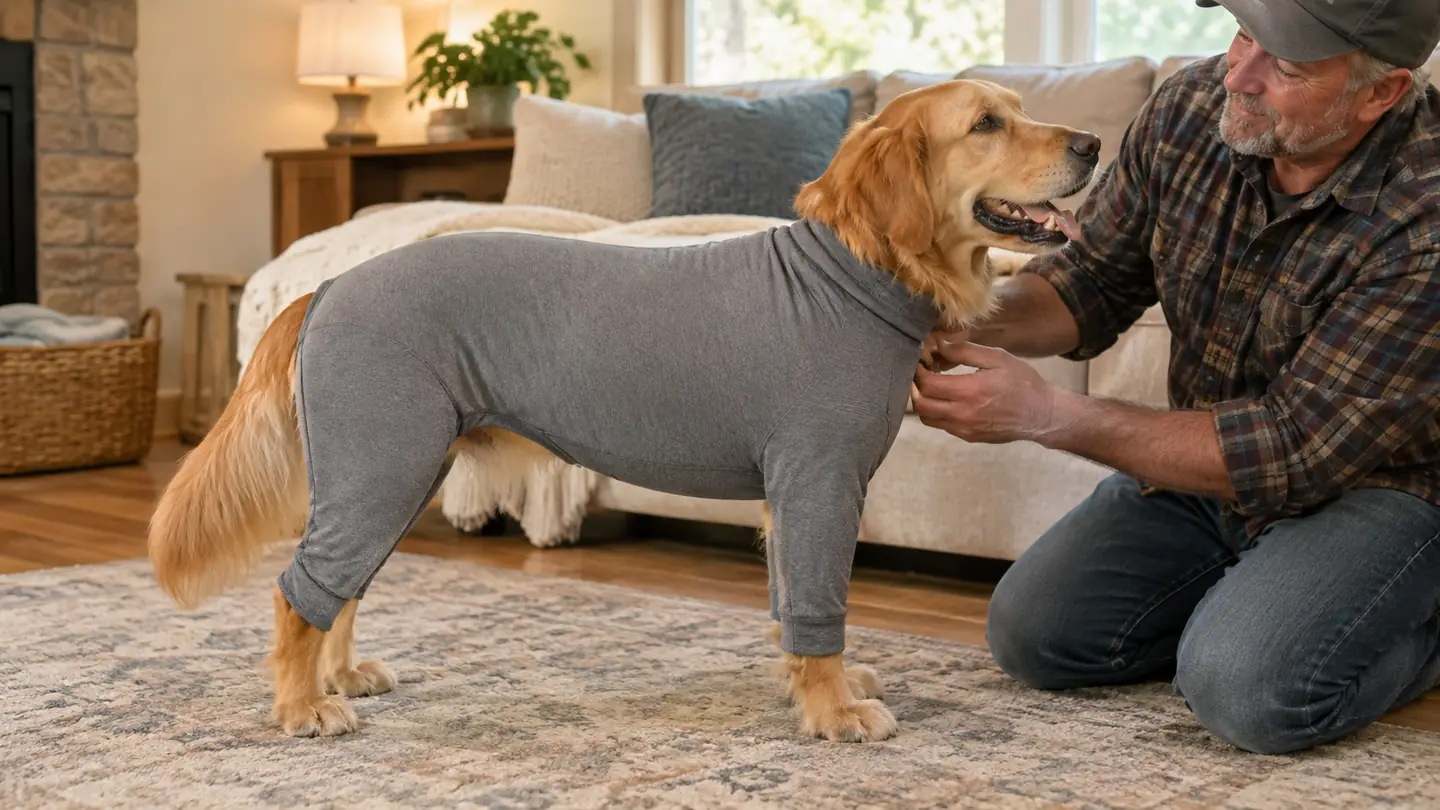
This was the lesson that took me the longest to learn. A dog who sleeps curled up does not stay neatly on top of a blanket. He turns, he stretches, he kicks, and by 3 AM the blanket is in a heap on the floor and he is shivering on the bare bed. The same thing happened with a sweater I had hand-knit him years ago. It was warm when he stood still, but it rode up and twisted the moment he settled down to sleep. I would find him at midnight with the sweater bunched around his chest and his back half bare, which was worse than no sweater at all.
What finally worked was a pull-on stretch onesie that covers his back, chest, and belly, and stays put because it fits like a second skin. I step his back legs in, ease it up over his body, and pull the front over his chest. There are no zippers, no snaps, and no belly opening, so there is nothing to dig into him while he sleeps. He stopped fussing with it after the first couple of nights, which told me more than any label could. I also measured his chest with a soft tape before ordering, and the size I chose from the chart fit on the first try, with just enough stretch for him to move naturally.
One thing I checked before bedtime was that the onesie was not bunched anywhere. Because it has no zippers or snaps, there are no hard spots to press into him, but a twisted leg opening can still be uncomfortable. On the first night I ran my hand over his sides after he lay down, felt that the fabric lay flat, and left him alone. That small check became part of our routine.
Step 3: Put the layer on right before bedtime, not earlier
I made the mistake at first of dressing Pip right after his evening meal. By the time we actually went to bed, he had been wearing the onesie for two hours, he was warm, and he wanted it off. He would scratch at the fabric and stare at me with an expression that said he was done with it. Now I wait until our bedtime routine is almost done. He gets his last potty break, we come inside, and then I put the onesie on him right before he settles into his bed. It signals that sleeping time is starting, and it means the warmth is there exactly when he needs it.
One practical detail: the onesie comes fully off for a late-night bathroom trip. That matters more than you might think. When Pip needs his middle-of-the-night bathroom trip, which is most cold nights, I can take it off quickly, take him out, and put it back on without wrestling him. A garment with snaps or a belly opening might be easier to manage in the moment, but it is also more likely to be uncomfortable to sleep in.
Our schedule is not fancy. Dinner at about 5:30, a short walk at 7, quiet time on the couch, and a last trip outside at about 9:45. By 10 o'clock the onesie is on and the lights are out. Keeping the same order every night helped Pip learn what was coming, and it helped me stop second-guessing whether I had forgotten something.
Step 4: Add a lightweight blanket over the bed, not over the dog
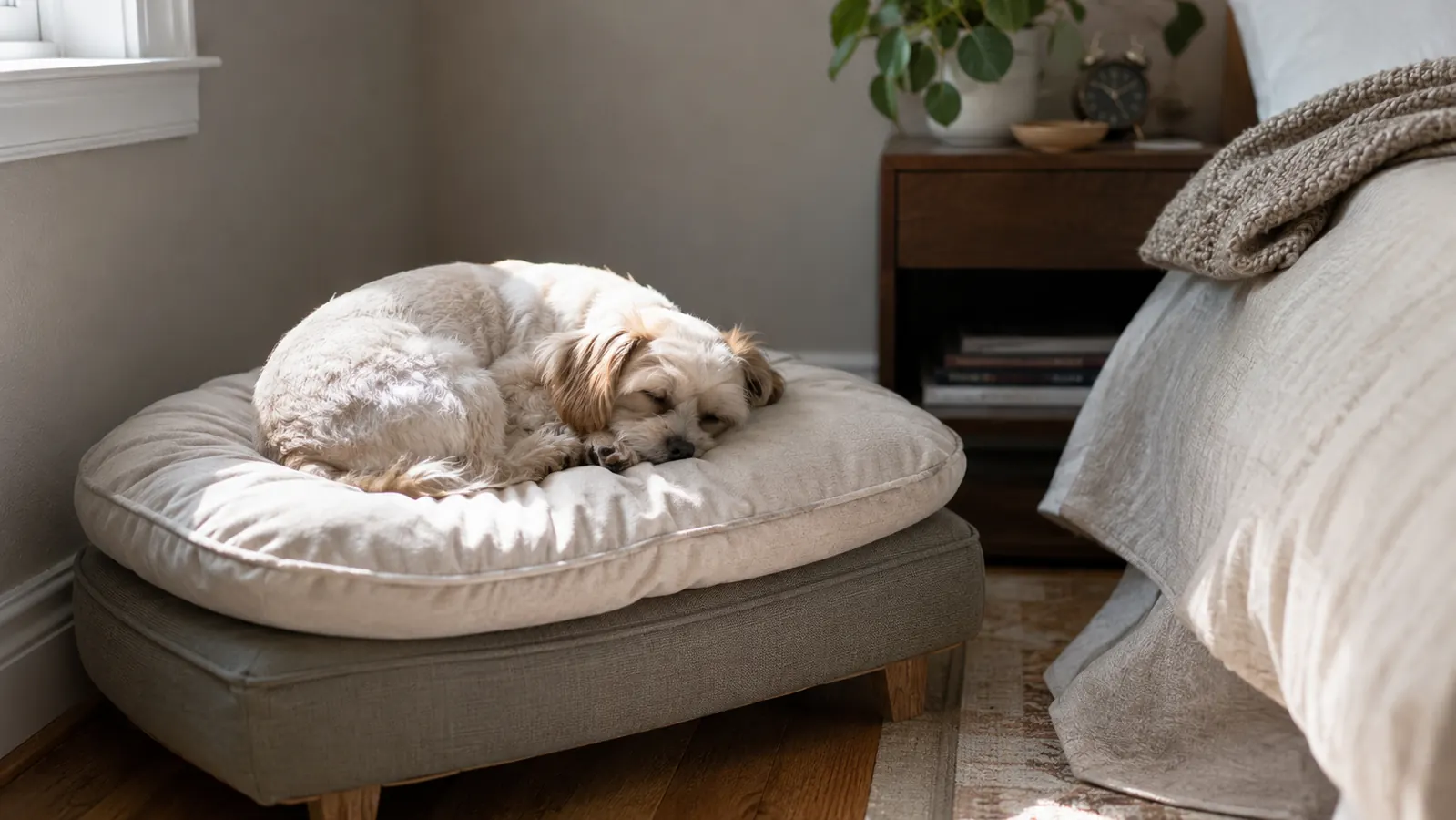
Once Pip is in his onesie, I lay a folded fleece blanket over the foot of his bed rather than tucking it over his body. There are two reasons. First, he can burrow under it if he wants to, and he often does. Second, if he kicks it off, he still has the onesie, so he is never left with nothing. A blanket on its own is all or nothing. A blanket over a base layer gives him a second option instead of a single point of failure.
I want to be careful here and tell you what not to do. Do not use a heated pad under a dog who is wearing a full-body garment, because the combination can trap too much heat. And do not put a heavy blanket over a small dog's face or head. If your dog is shivering despite a warm layer and a blanket, check the room temperature first, and if he is still cold, add a second thin layer rather than a heavier blanket.
The blanket I use is an old fleece throw from the living room, folded in half so it is about the size of Pip's bed. I keep it on the arm of the couch during the day and move it to his bed at night. It does not need to be a dog blanket. Any soft, breathable layer that is not too heavy will do.
Step 5: Watch the first two nights and adjust
No routine works perfectly on the first try, and I do not expect yours to either. The first night Pip wore the Spark Paws onesie, he slept from 10 p.m. to 6:30 a.m. without getting up, which was a long way from his usual shivering wake-ups. The third night he slept warm again, and that is the pattern that has held all winter. The change was not dramatic. It was simply that he was not waking up cold anymore.
Watch for signs that the layer is too warm. If your dog pants, moves away from you, or tries to wriggle out of the garment, he may be overheated, and you should try a lighter layer or a cooler room. If he still shivers with the onesie on, check that it is not twisted or bunched, and consider a second thin layer over the top. Every dog runs a little different, and the first two nights will tell you which way to go.
One detail from that first week is worth mentioning. On the morning after the second full night, I found Pip stretched out on his side with his legs loose, the way he sleeps when he is truly comfortable. I had not seen him sleep like that before, and it told me the onesie was doing its job. I still check on him once before I go to sleep, and he still needs to go out once on most nights, but I no longer hear him shivering. We both sleep better now, which is something neither of us managed before.
What Else Helps
The Spark Paws onesie did the heavy lifting, but it was not the only thing that helped. A short walk earlier in the evening helped Pip settle, because he got his energy out before bedtime. I also stopped letting him nap on the couch after 8 PM. A dog who has just woken up at 9 is less likely to settle at 10, so we switched to quiet time instead, with him curled beside me while I read. By the time we headed for the bedroom, he was already drowsy. And I keep the house at a steady temperature overnight instead of letting it drop, which means the air around his bed stays reasonably warm even on the coldest Flagstaff nights. None of these things worked on their own, but together with the onesie, they turned our nights around.
One more thing that helped was paying attention to how the onesie fit as the weeks went on. The fabric stretches with wear, and a garment that fit snugly in January can get loose by March. I wash it on gentle and let it air dry, and it has kept its shape through the whole winter. If it ever started riding up at night, I would know it was time to look at the fit again.
The first night Pip wore the Spark Paws onesie, he slept from 10 p.m. to 6:30 a.m. That was the whole change: he simply was not waking up cold anymore.
Give your cold dog the same warm nights we finally got
If your dog wakes up shivering, try the same routine that worked for us: warm the room, add a stretchy onesie that stays on, and keep a blanket nearby as a second layer. The Spark Paws Stretch Onesie is the piece that finally made the difference for Pip.
Amazon Check Today's Price on Amazon →