Some dogs bound out the door in a snowstorm. My Italian Greyhound, Pip, is not one of them. He is seven years old, about 13 pounds, with a thin short coat and no body fat to speak of, so once the thermometer drops below about 50 degrees, he stands at the back door and shivers. The first time I carried him out to the snow, he pressed himself against my coat and refused to put a paw down. That was the moment I started shopping for a real winter coat, not another sweater.
I had hand-knit him a sweater years ago, and it was fine for the house. It was not fine for a Flagstaff morning. I bought the Dogcheer winter coat in late November, right before our first real snow, and Pip wore it on every single morning walk from then through March. One full winter of daily use, roughly a one-mile loop on the neighborhood trail every day, and I kept notes the whole time. Here is what I learned.
The Quick Verdict
The Dogcheer winter coat is the warmest, most practical coat Pip owns. It stopped his shivering on the first walk, fit him right from the size chart, and survived a full season of snow, slush, and machine washes. It covers only part of the belly, there is no hood, and it costs more than a basic fleece. If you have a short-coated dog that dreads winter, this is the coat I would buy again.
Amazon Check Today's Price →The coat that got Pip through a Flagstaff winter
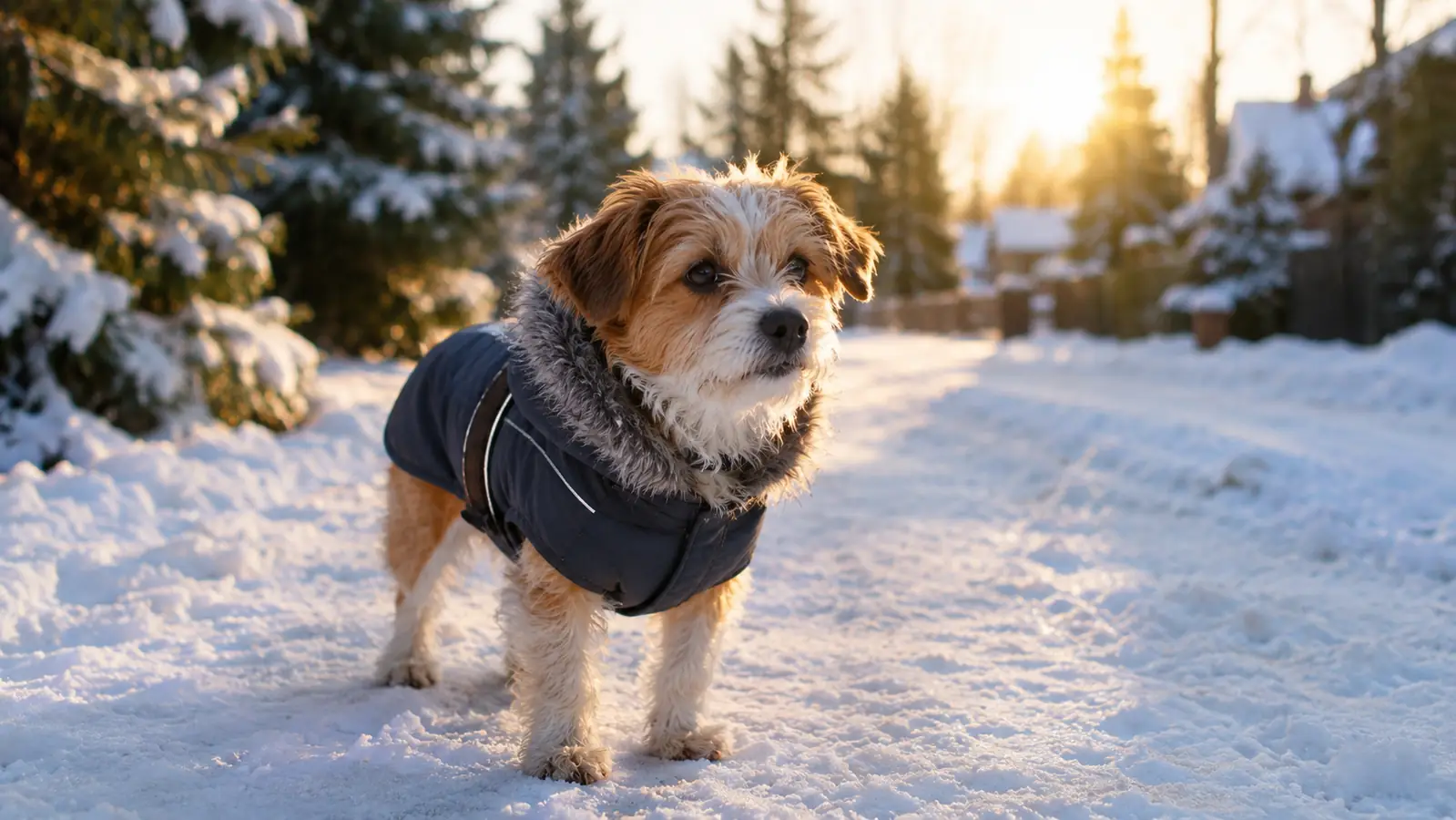
The Dogcheer winter coat has a waterproof shell, a warm insulated lining, and a side zipper that makes it easy to put on a squirmy small dog. It covered Pip from his shoulders to his hips and kept him dry in snow and slush all season.
Amazon Check Today's Price on Amazon →How I've Used It
Before the Dogcheer coat arrived, I had tried the Gooby fleece vest, which I bought in early November. It was my first store-bought dog garment, and it was fine on a dry cold morning. It was not fine on the wet morning a few weeks later, when a mix of rain and snow caught us halfway around the loop. By the time we got home, the fleece was soaked through and Pip was shivering under it. That walk taught me the difference between a layer for a dry day and a coat for a real winter morning. I dried him off, went straight home, and ordered the Dogcheer coat that same afternoon. The vest still has its place for dry days, but I stopped reaching for it on mornings when the weather could turn.
Pip has worn the Dogcheer coat on every morning walk since late November. Our routine is the same every day: about one mile on the neighborhood trail, roughly 25 minutes, and the temperature is usually below freezing when we start. He also wears it for quick trips to the vet, for walks around the block after a fresh snow, and any time we have to be outside longer than the time it takes him to do his business.
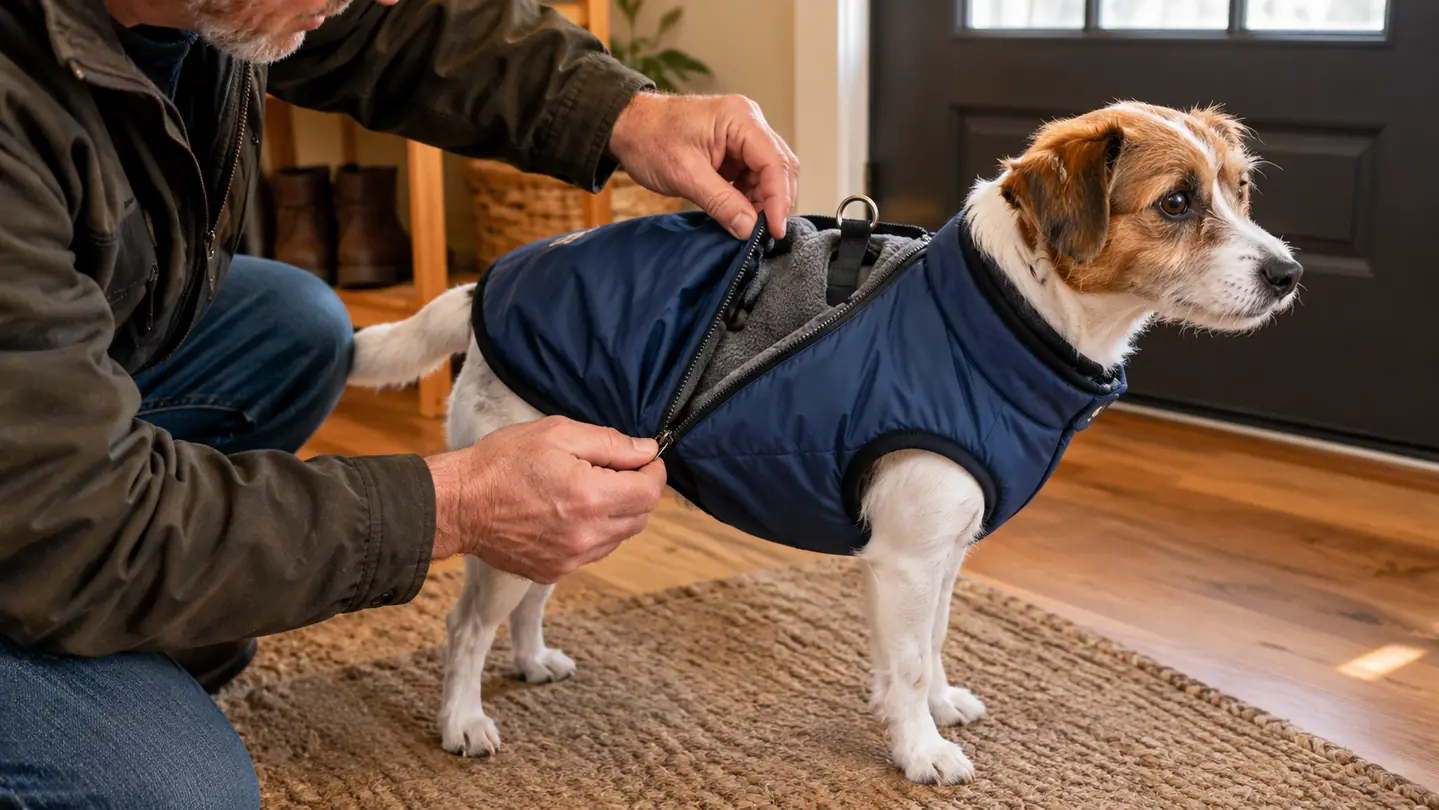
The coat zips closed along his side, which took me a few tries to get used to. Most dog coats I had handled close over the back or under the chest, so the side zipper felt unfamiliar at first. It turned out to be the best part of the design. Pip does not like things pulled over his head, and he does not like wrestling. With the Dogcheer coat, I lay it flat on the floor, have him step into it, then zip it up his side. The whole thing takes less than a minute, and he stands still for it.
There is a leash opening on the back, and I use it with his harness rather than his collar. The opening is well placed and the zipper has never snagged on the harness clip, which surprised me. I expected a season of wrestling with a stuck zipper and I got none. I wiped the coat down after snowy walks, and it held its shape through the whole season.
The First Walk: When I Knew It Was Going to Work
I remember the first wear clearly because it was the first snow of the season. Pip had refused to go out that morning in his old sweater. He stood on the porch, one paw lifted, and gave me a look that said absolutely not. I brought him inside, opened the Dogcheer package, and zipped him into the coat on the kitchen floor.
He stopped shivering within the first block. That is not an exaggeration. He went from trembling against my leg to trotting ahead of me, sniffing at the snow, doing the little high-stepping walk he does when he is happy. The coat covers his back, his chest, and part of his belly, which is exactly where a short-coated dog loses heat. The insulated lining held his body heat in, and the waterproof shell kept the snowmelt off his fur.
The snow that morning was maybe two inches deep, light and powdery, and the trail was empty except for a few rabbit tracks. We did the full mile, which took a few minutes longer than our usual 25 because Pip kept stopping to investigate the drifts. At one point he flopped onto his side and rolled in the powder, which he had never done on a winter walk before. A dog that rolls in snow is a dog that is not cold. He led the way home with his tail up, and I remember thinking I had not seen him move like that on a cold morning in years.
By the end of the loop, his ears were pink and cold, but his body was warm under the coat. I checked him the way I always do after a winter walk: hands on his chest, under the coat, and on his bare legs. His chest was toasty. That first walk told me the coat was doing its job, and it kept doing it all season.
He stopped shivering within the first block. That is not an exaggeration. He went from trembling against my leg to trotting ahead of me, sniffing at the snow.
Fit, Sizing, and How It Stays Put
I measured Pip the evening before I ordered, with a soft tape measure around the widest part of his chest, just behind his front legs. It came out to about 14 inches. The Dogcheer size chart had a range that covered it, so I ordered that size and crossed my fingers. When the coat arrived, I laid it flat on the kitchen floor and it looked almost comically large next to a 13-pound dog. But once he stepped into it and I zipped it up, the fit was right. There was room for his harness underneath without any bunching, and the coat did not slide or spin when he moved. The leash opening on the back lines up with the clip on his harness, so the leash never pulls the coat crooked. That was a detail I did not expect to matter as much as it did. It fit on the first try, which is rare enough in dog clothing that I want to say it twice. No returns, no exchanges, no second attempt. By the second week I had stopped checking the fit entirely, which is the highest compliment I can pay a piece of dog clothing.
The coat stays put on walks, which is something I did not expect. Small dogs with narrow chests, and Italian Greyhounds especially, can slip out of coats that fit everywhere else. Pip has a deep chest and a very narrow waist, so most garments slide around on him. The Dogcheer coat has a good shape through the chest and enough coverage over the hips that it does not ride up, even when he trots. The side zipper keeps the whole thing snug without being tight.
I will be honest about the two things it does not do. It covers only part of the belly, so a low-slung dog can still get snow on the rest of his underside. And it does not have a hood, which I did not miss on Pip because his ears are short and he does not seem to want head coverage. If your dog has sensitive ears or a long coat that soaks up snow, you may want a different style. For Pip, the coverage was exactly right.
How It Held Up Over the Winter
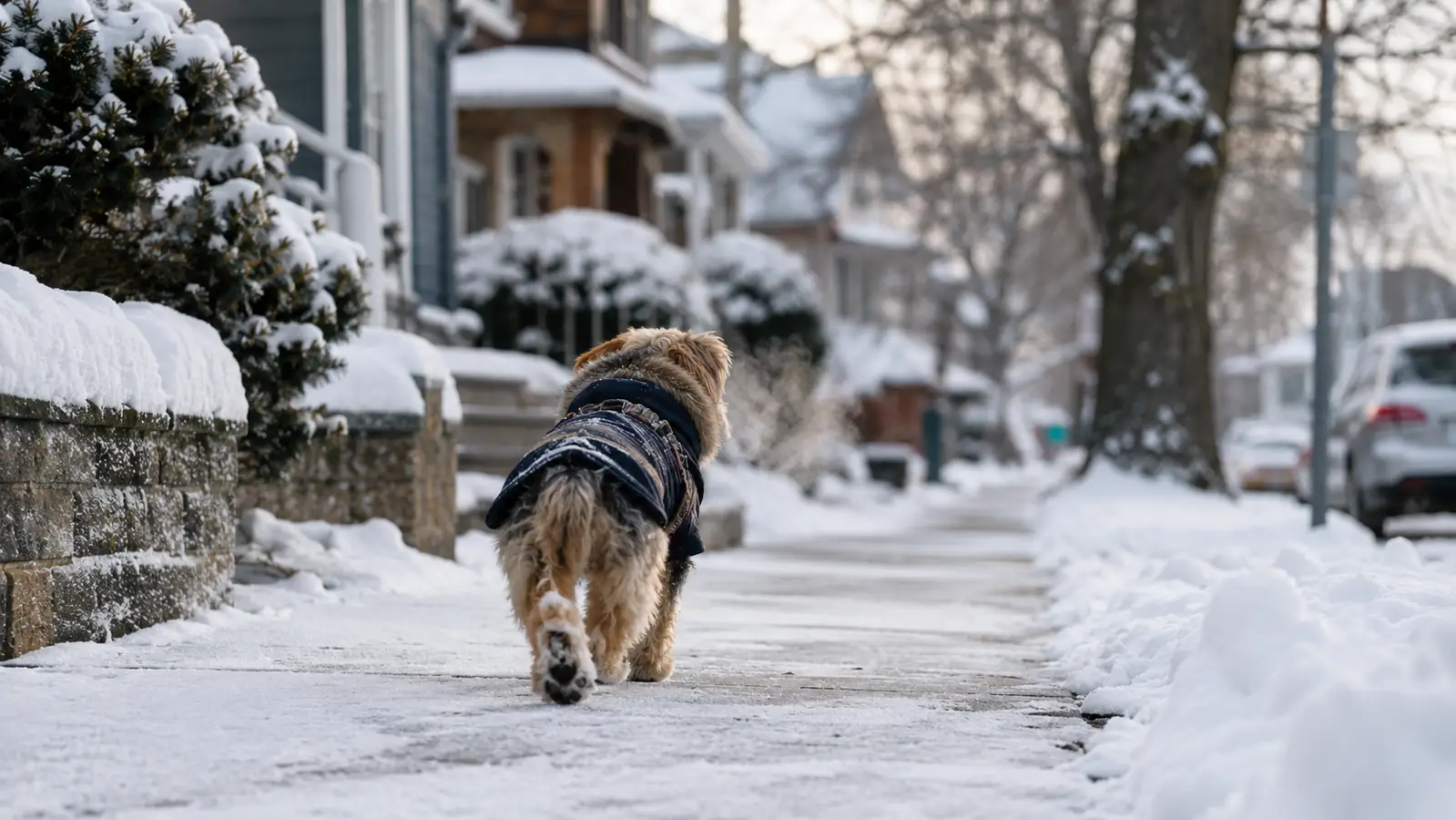
Durability is where the Dogcheer coat really impressed me. Pip wore it daily from late November through March, through snow, sleet, and the slushy mess that forms when the sun hits the trail in the afternoon. The waterproof shell never soaked through, and it looked as good in March as it did in November.
I machine washed it four times over the winter, always on gentle in cold water, and hung it over the back of a kitchen chair to dry. It was always dry by the next morning. The zipper still runs smooth, the seams are intact, and there is no pilling on the lining. I sew a little myself, so I tend to notice things like seam allowances and fabric quality. This coat is put together properly, and nothing pulled loose at the stress points around the leash opening, the spot I checked most often.
The one thing I learned the hard way: one morning in January, after a wet snow, I hung the coat up without wiping the zipper, and by afternoon a little ice had formed in the teeth. I set it near the heater for a few minutes and it was fine. After that I wiped the zipper area down whenever the walk had been wet, and the problem never came back.
One small thing: the coat picked up a few burrs on a walk through the dry grass at the edge of the trail. They brushed off easily enough, but I would not call the shell completely snag-proof.
The Tradeoffs I Noticed
No coat is perfect, and the Dogcheer has three tradeoffs worth knowing before you buy. The first is the belly coverage. The coat covers his back, chest, and part of his belly, but the rear part of his belly and his groin stay exposed. On the coldest mornings, Pip still lifted his legs high through the deep snow. The coat kept his core warm, but I would not call it full-body protection.
The second is the price. It costs more than a basic fleece sweater, and if your dog only needs a little warmth on a dry cold day, a fleece might be enough. I compared puffer jackets by handling them in a pet store, and I never bought one, because the Dogcheer coat did what I needed. But if your budget is tight and your winters are mild, you can get away with less.
The third is the side zipper. I came to love it, but it takes a little practice the first few times, especially if you are used to step-in or over-the-head styles. You have to make sure no fur is caught in the zipper before you pull it up. After the first week, I could do it without thinking. If you have a dog that will not stand still, you may want a second pair of hands the first time.
What I Liked
- Stopped Pip's shivering on the first walk, even below freezing
- Waterproof shell held up through a full season of snow and slush
- Fit correctly on the first try using the chest measurement
- Side zipper is easy once you learn it, and it never snagged
- Machine washed on gentle and air dried without losing its shape
- Good leash opening on the back that works with a harness
Where It Falls Short
- Covers only part of the belly, so low-slung dogs can still get some snow underneath
- No hood, which some dogs with sensitive ears may need
- Costs more than a basic fleece sweater
- Picked up a few burrs on dry grass at the trail edge
Who This Is For
Buy the Dogcheer winter coat if you have a small, short-coated dog that shivers on cold mornings and refuses to go outside. It is ideal for Italian Greyhounds, Chihuahuas, Whippets, and other thin-coated breeds that lose body heat fast. It is also a great choice if your winters are genuinely cold and wet, not just chilly. The waterproof shell and insulated lining make it a true winter coat, not a fashion piece.
It is also for anyone who wants a coat that fits the first time and survives daily wear. I put this coat through a full Flagstaff winter and it looks the same as the day it arrived. If you walk your dog every morning no matter the weather, the Dogcheer coat is built for that routine.
Who Should Skip It
Skip it if your dog has a thick double coat and does not actually need insulation. A coat like this will just make them overheat on a walk. Skip it if you need belly coverage for a low-slung dog that wades into deep snow, because part of the belly stays exposed. Skip it if your dog hates zippers and will not stand still for the two seconds it takes to close the side zipper. A step-in fleece vest might be an easier daily choice for a dog that fights getting dressed.
And if your winters are mild, with just a few cold mornings a year, you probably do not need a waterproof insulated coat at all. A simple sweater or fleece will do. The Dogcheer coat earns its place in a serious winter climate, and that is the honest truth.
One winter in, I would buy the Dogcheer again
If your dog shivers on cold mornings the way Pip did, the Dogcheer winter coat is the warmest, most durable option I tested. It fit on the first try, it held up to daily walks, and it made our whole winter easier.
Amazon Check Today's Price on Amazon →