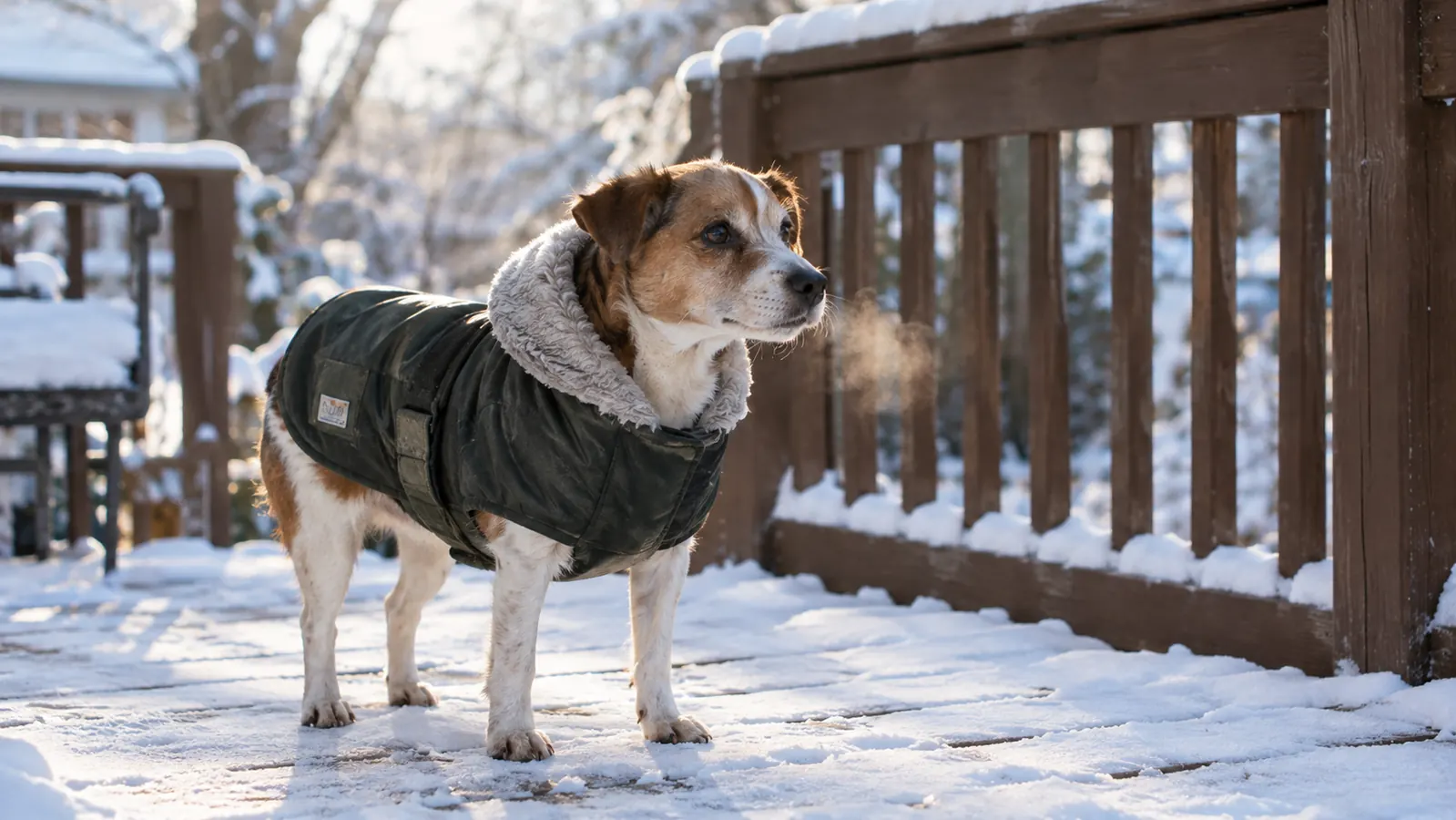
Every cold morning on our one-mile loop, I see the same thing: a small dog in a puffer jacket bobbing along like a marshmallow, and another in a sleeker coat that moves with him. I spent most of that winter asking myself which one Pip actually needed. He is a seven-year-old Italian Greyhound, about 13 pounds, with a thin short coat and almost no body fat, so he shivers on any morning under about 50 degrees and flat-out refuses to go out in rain. I bought the Dogcheer Winter Coat in late November, right before the first snow, and it carried him through the whole Flagstaff winter. But I did not grab the first coat I saw. The two styles were sitting side by side in every store, so I spent real time comparing a fitted waterproof coat with the puffy jackets before I settled on one. What I learned surprised me, because the answer was not the one I expected when I started.
The short answer, after a full winter of morning walks on the same one-mile loop, is this: for a small dog with a narrow chest, the Dogcheer is the better everyday coat, and I would buy it again without hesitating. A puffer jacket is genuinely warmer on the handful of mornings when the temperature stays below about 15 degrees, and some dogs love the extra bulk. But a puffer is thicker, harder to put on, and most of the ones I handled in the store were only water-resistant, not waterproof. In a winter that is mostly wet snow and slush, that difference decides it. The Dogcheer is the coat I reached for almost every day from November to March, and it is the coat I would hand to a friend who asked what to buy. That is the honest short answer, and it did not change once from November to March.
| Dogcheer Winter Coat | Typical Puffer Jacket | |
|---|---|---|
| Wet snow and rain | Waterproof shell, so snow and slush bead up and Pip stays dry | Most are water-resistant, not waterproof, and wet through on the chest |
| Getting it on | Zips closed along his side, nothing goes over his head | Often pulls over the head or needs one leg at a time |
| Leash opening | Built-in opening on the back for the harness clip | Many lack one, so the leash rides under the hem |
| Warmth on the coldest days | Insulated, enough for a normal Flagstaff morning | Thicker fill, noticeably warmer below about 15 degrees |
| Fit on a narrow frame | Sized from the chest, slim cut that stays put | Looser cut that can twist around a deep chest |
| Hood | No hood, so nothing blocks his view | Many puffers come with a hood for wind and snow |
| Care | Wipes clean after a snowy walk, machine washable on gentle | Often hand wash only, slow to dry |
How I Compared Them
I want to be straight with you about one thing: I never bought a puffer jacket. I compared them the honest way, which is to stand in the pet store aisle and handle every one on the rack. I pressed the fill, rubbed the fabric between my fingers, and turned each jacket inside out to look at the seams, because I sew a little myself and seams tell you how long a thing will last. I also checked for two things that matter on a walk: a leash opening on the back, and some kind of belly coverage. Most of the puffers had neither. The ones with hoods were charming and completely useless for Pip, who would have spent the whole walk shaking his head at the thing flapping around his ears.
Then I ordered the Dogcheer from the chest measurement on the size chart, and it fit on the first try, which never happens with dog clothes in my house. I measured him with a cloth tape while he stood over a treat, which is the only way Pip holds still for anything. I kept a mental note of every walk, the same one-mile loop every morning, and by February the pattern was plain. Over the winter I watched the puffer dogs on the trail the way you watch a neighbor's roof during a storm, to see how theirs held up. I noticed how often their owners stopped to straighten the jackets, how damp the fabric looked after a wet snow, and whether the dogs seemed to mind. And I watched Pip in the Dogcheer: whether he shivered at the door, whether the coat stayed put for the full mile, whether he still wanted to walk. By March I had a clear answer, and it surprised me, because I had expected the puffer to win on warmth alone.
One thing I did not do was trust the reviews that called every coat the warmest ever. Warmth is about the dog in front of you, not the marketing. A 70-pound retriever runs hot; a 13-pound Italian Greyhound with no body fat does not. I needed to see and feel the coats myself, and I am glad I did.
Where the Dogcheer Wins
The biggest difference is water. Flagstaff snow is wet and heavy, and it turns to slush the moment the sun touches it. The Dogcheer has a waterproof shell, so snow beads up and slides off, and Pip stays dry right down to the part of his belly the coat covers. I tested this on the morning after a storm, when the snow was heavy enough to wet a dog through in two blocks, and Pip came home dry. The puffers I handled were mostly water-resistant at best. One tag said 'repels light moisture,' which is not the same as waterproof, and a wet dog on a 25-degree walk is a miserable dog. For a coat that has to work in real snow, waterproof beats puffy every time.
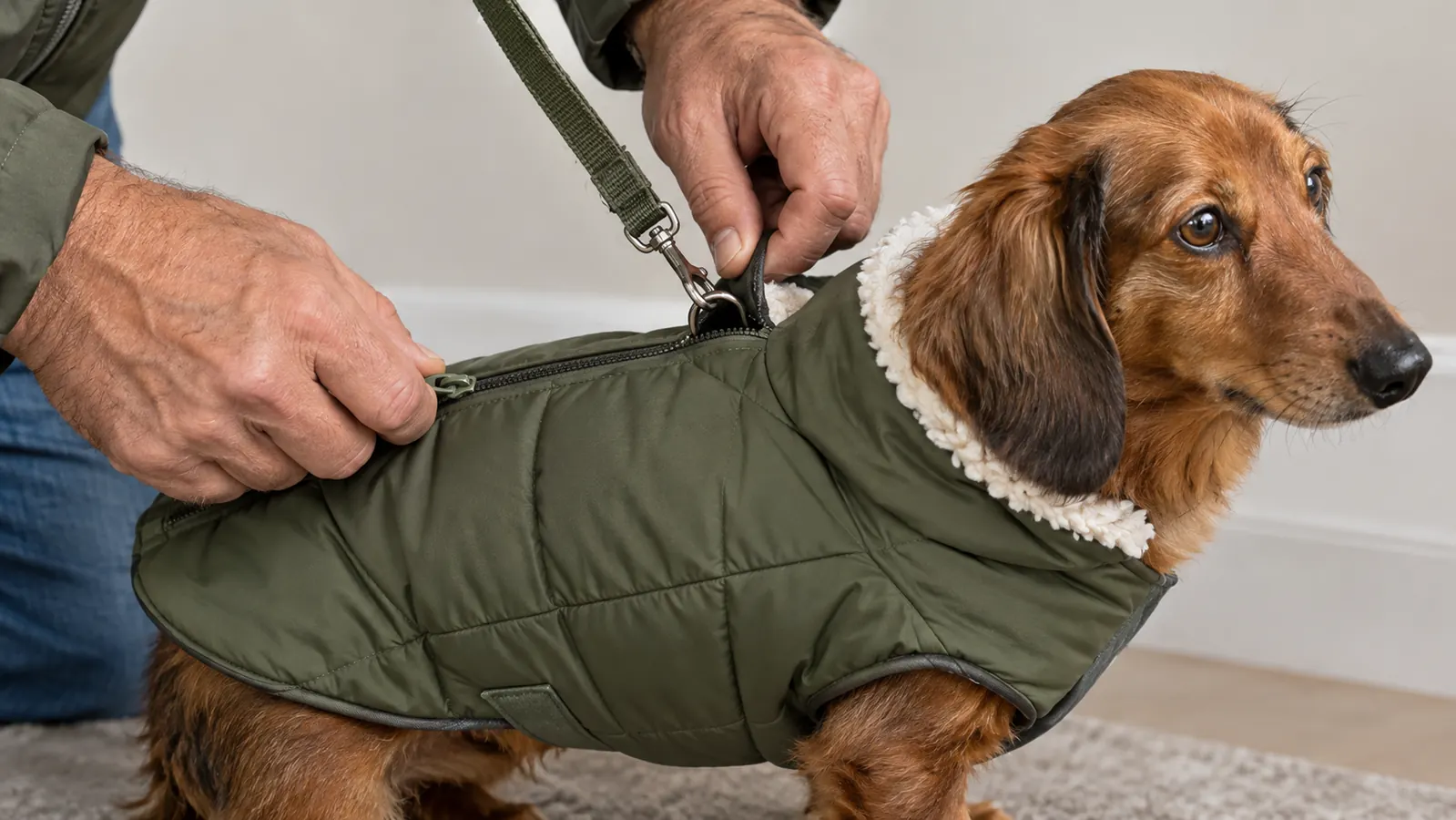
The second win is getting it on. The Dogcheer zips closed along his side, so it never goes over his head. Pip stands still for it, which is remarkable for a dog who treats anything near his ears as a personal insult. The slim cut stays put on his narrow chest, no twisting, no constant straightening. And the leash opening on the back means the clip sits where it should instead of riding under the hem. The puffers I tried in the store were looser, and loose on a dog shaped like Pip means the jacket rotates around his middle by the end of the block.
Where a Puffer Jacket Wins
I am not going to pretend the puffer lost on everything, because it did not. A puffer jacket is warmer, full stop. The fill is thicker, and on the handful of mornings when Flagstaff stays below about 15 degrees with a wind on top, a puffer would have kept Pip warmer than the Dogcheer did. I checked the thermometer on those mornings, and I remember one in January when it read 9 degrees at the door. I am not exaggerating the cold here; Flagstaff earns its winters. He never shivered in the Dogcheer after the first block, but on the truly bitter days I could feel the difference when I picked him up. If you live somewhere dry and deeply cold, where the snow is powder and the air is sharp, that extra insulation is the whole point.
Puffers also win on packability, and on hoods if that is what you want. They compress down small, which matters if you travel with your dog or stuff a coat into a bag for a trip to the vet. And several of the ones I handled had hoods, which some dogs tolerate and some owners genuinely want for wind. I will also say this: the puffer dogs on our trail seemed happy enough. Their owners adjusted them more often, and the jackets looked damp after wet snow, but the dogs were not shivering. For a cold, dry climate and a dog that does not mind bulk, a puffer is a fair choice.
The coat that got a 13-pound shiverer through a Flagstaff winter
If your dog is built like Pip, thin-coated and narrow-chested, the Dogcheer Winter Coat is the one I reached for every snowy morning. Waterproof shell, zip-up side, leash opening on the back, and it fit from the size chart on the first try.
Amazon Check Today's Price on Amazon →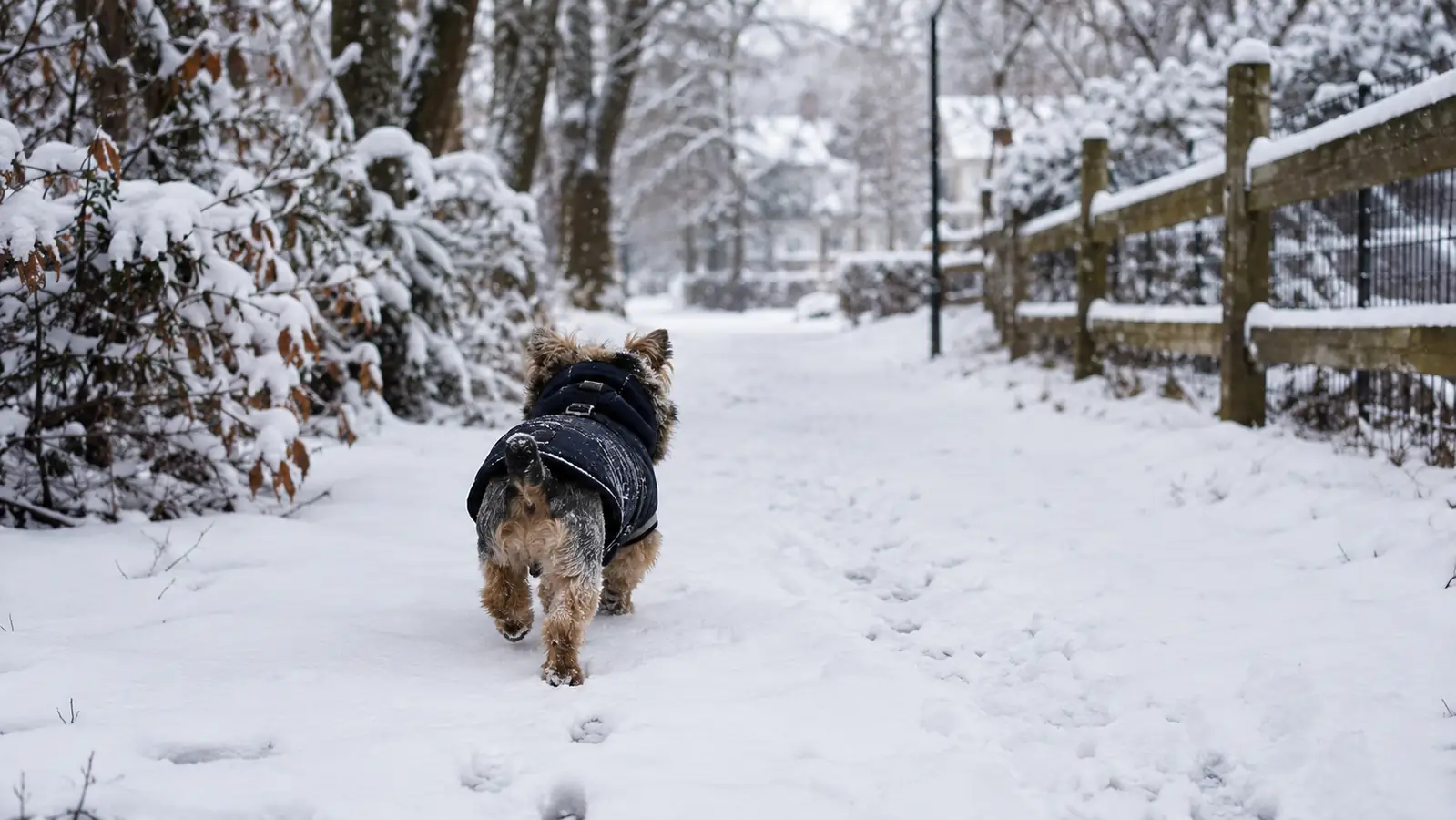
What to Check Before You Buy Either
Whatever you choose, measure your dog's chest before you order. Both styles are sized to the chest, and a coat that fits the neck but binds the chest will make a dog miserable. Pip is 13 pounds with a deep narrow chest, and the Dogcheer's size chart put him in a size that fit from the first wear. Take that measurement in the morning, when a dog's chest is at its deepest, and add a finger's width for the coat to breathe.
Then check the three things I checked. Does it have a leash opening on the back, or will the clip ride under the hem? Does it cover at least part of the belly, where a short-coated dog loses the most heat? And how does it close? A zip along the side is easier for a dog who hates overhead things than a jacket that pulls over the head. Those three details did more for us than any amount of extra fill ever could. And if you sew at all, look at the zipper. A cheap zipper is the first thing to fail on a dog coat, and the Dogcheer's has held up through a winter of daily use and a few gentle machine washes.
Who Should Buy Which
Buy the Dogcheer if your winters look like ours: wet snow, slush, rain that turns to ice by afternoon. Buy it if your dog hates having things pulled over their head, if they have a narrow chest that loose coats slide around on, or if you want one coat that handles the whole winter without a second thought. Buy it if you walk in weather, not just from the door to the car.
Buy a puffer jacket if you live somewhere the cold is dry and serious, the kind of place where snow squeaks under your boots and the temperature does not climb above zero for weeks. Buy it if your dog runs warm, does not mind a little bulk, and you need something that packs down to nothing for travel. And if a hood is non-negotiable for you, a puffer is where you will find it. For us, the Dogcheer was the right call, and I would make the same call again. Pip wore it on every snowy and wet morning from late November to March, and he stopped shivering within the first block every single time. The only mornings I wished for more were the single-digit ones, and there were not many of those.
If you are standing in the aisle the way I was, torn between a sleek fitted coat and a puffy one, ask yourself what your winter actually does. If it snows wet and turns to slush, get the waterproof coat and do not look back. If it is dry and bitter, the puffer has its place. For a small, thin-coated dog in a winter like ours, the Dogcheer is the coat that got us through. That is the honest answer, and it is the one I would give a friend at the dog park. There is no wrong answer between a good coat and a good puffer, only a wrong match for your weather and your dog. We found ours.
One coat, one winter, no shivering
The Dogcheer Winter Coat earned its place in our mudroom. If your dog's winter looks like ours, you will reach for it every morning, the way I did.
Amazon Check Today's Price on Amazon →