
Every winter I watch the same thing happen at the dog park. Someone shows up with a small, thin-coated dog, the temperature is sitting at twenty degrees, and the dog is shaking before they have even left the parking lot. The owner says, "He hates the cold," and I always want to ask, "Or does he just not have the right coat?" I live in Flagstaff, Arizona, where winter mornings sit well below freezing. My dog Pip is an Italian Greyhound, seven years old, about thirteen pounds, with a coat that is basically decorative. He shivers on any morning under about fifty degrees, and before I bought him the Dogcheer Winter Coat, a cold walk meant a shivering dog and a guilty owner.
This is the review I wish I had found before I ordered. The internet is full of Dogcheer coat reviews that all say the same three things: it is warm, it is waterproof, and the dog looks adorable. All of that is true. What nobody tells you is how the coat handles a real winter, where it comes up short, and which dogs should skip it entirely. I used this coat every single morning from late November through March, on a one-mile trail loop that takes us about twenty-five minutes, through snow, wind, and the occasional surprise storm. This is what I would tell a friend who asked me, honestly, whether it is worth it.
The Quick Verdict
The Dogcheer coat is the first thing that stopped my shivering Italian Greyhound mid-walk, and it survived a full Flagstaff winter of daily use. Buy it for warmth on cold, dry days, and know that the belly is only partly covered and there is no hood.
Amazon Check Today's Price →The coat that ended our shivering walks
If you have a short-coated dog who dreads winter mornings, this is the coat I reached for every day from November to March. It zips along the side, leaves the back clear for a harness, and Pip stopped shivering within the first block of our first snowy walk. Measure your dog's chest and check today's price.
Amazon Check Today's Price on Amazon →How I Used This Coat Through One Flagstaff Winter
A little history first, because context matters. Pip has always hated the cold. Years ago I hand-knit him a simple sweater, and it helped inside the house but did almost nothing on a walk. In early November I bought my first store-bought dog garment, a stretch fleece vest, and it was fine for a dry, chilly morning. But the first real snow came in late November, and I could tell within half a block that the vest was not enough. That is when I ordered the Dogcheer Winter Coat, using the chest measurement on the size chart. It fit on the first try, which never happens with dog clothes.
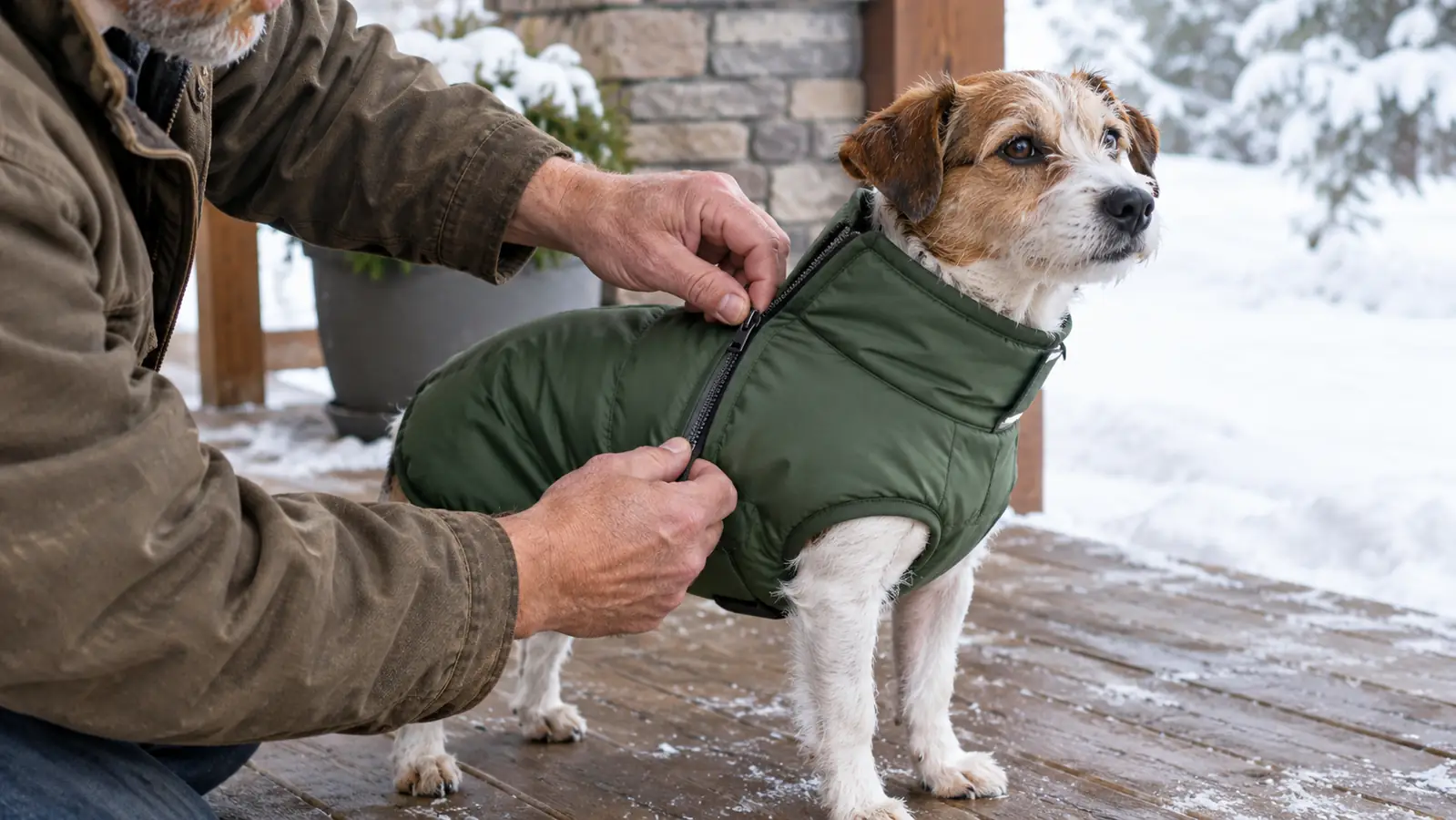
From late November through March, the coat went on every single morning. Our routine never varied: the same neighborhood trail, one mile, about twenty-five minutes, no matter the weather. Pip wore the coat over his harness, with the leash clipped through the opening on the back. The coat zips closed along his side, which I liked from day one, because nothing has to go over his head. He stepped into it, I zipped it, and we were out the door. On the first snowy morning, he stopped shivering within the first block. That is not an exaggeration. I noticed it because I was bracing for a miserable walk, and instead he was trotting.
I did not baby this coat. Snowy walks ended with a wipe-down at the door, and a few times over the winter I machine washed it on gentle and let it air dry. It held its shape, the zipper never jammed, and the waterproof shell kept the snow from soaking through to his back and chest. By March, the coat looked almost the same as the day it arrived. That is the part I did not expect, because so many dog coats I have seen at the dog park go limp and pilled by February.
The Details That Matter When You Are Actually Walking a Dog
Online listings tell you a coat is insulated and waterproof, but they do not tell you how it behaves on a real dog. Here is what I learned. The Dogcheer coat covers his back, his chest, and part of his belly. That partial belly coverage is the single most important detail to understand before you buy. For Pip, whose belly sits low and close to the snow, the uncovered strip of belly did get cold on the very worst mornings. It did not ruin the walk, but I want to be honest that it is there.
The shell is genuinely waterproof, not just water-resistant. I tested this without meaning to during a surprise snow shower that turned to sleet. Where the fleece vest would have soaked through in minutes, the Dogcheer coat beaded the water and kept his back completely dry underneath. The insulation is what stops the shivering. On a twenty-degree morning with wind, Pip's chest stayed warm to the touch when we got home. That is the whole job of a winter coat, and it does that job.
The zipper runs along his side, which is both a feature and a quirk. It is a feature because it means no wrestling a coat over a nervous dog's head, and it leaves the top of his back free for the harness and leash opening. It is a quirk because you have to be careful zipping around a dog who is impatient to go outside. I learned to zip slowly, because Pip would try to bolt the second the front door opened. There is no hood on this coat, which I consider a plus, because hoods on small dogs just slide down over their eyes and annoy everyone. If you specifically want hood coverage, this is not the coat for you.
What Nobody Tells You About Winter Dog Coats
Here is the honest part, the stuff that does not fit into a five-star review. First, a winter coat is a warmth product, not an all-weather product. The Dogcheer coat is waterproof, and it handled snow and sleet fine. But it is not a raincoat, and it is not designed for the kind of warm, soaking monsoon rain we get in Flagstaff in the summer. For that, I use a lightweight Ruffwear raincoat that goes over his head and buckles under his chest. Different jobs, different coats. If you buy the Dogcheer coat expecting one item to cover snow, rain, and everything in between, you will be disappointed.
Second, sizing is everything, and the size chart is actually honest. I measured Pip's chest with a soft tape measure, right behind his front legs, and ordered from that number. The coat fit on the first try, which I genuinely did not expect. But I have seen dogs at the dog park wearing Dogcheer coats that were clearly one size too big, with the shell sagging off their rumps, and the owners complaining that the coat did not keep the dog warm. A coat that does not fit cannot keep a dog warm, because the insulation only works when it sits against the body. Measure your dog. Do not guess.
Third, the partial belly coverage is the tradeoff you need to decide about in advance. On the coldest mornings, that exposed strip of belly was the only part of Pip that felt cold when we got home. It never stopped him from walking, and I handled the worst days by simply keeping the walk to our usual mile instead of extending it. If you have a very small dog who lifts his feet in the snow, or a dog with a particularly exposed belly, you may want to pair this coat with boots on the coldest days. The coat does a lot, but it does not do everything.
How It Compares to the Alternatives I Actually Considered
I want to be clear about one thing: I never bought a puffer jacket for Pip. I went to a pet store and handled the puffer jackets on the rack, because I wanted to see the difference before spending money. The puffers were warmer to the touch and lighter, but they were also bulkier around the legs, and the ones I looked at did not have the same side-zipper design. For a thirteen-pound Italian Greyhound with legs like twigs, bulk is the enemy. The Dogcheer coat is trimmer through the legs, which matters more to me than a slightly warmer fill.
The other alternative I had in the house was the fleece vest I bought in early November. That vest is still useful on dry, chilly mornings and around the house, and Pip does not sleep in it, so it gets plenty of daytime use. But it soaks through in real rain and it does nothing in wind. The Dogcheer coat replaced it as the default for actual walks. I think of them as a pair now: the vest for mild days, the coat for real winter. If you already own a fleece layer, the coat is the piece that extends your walking season, not a replacement for everything.
I also considered a stretchy onesie for the coldest nights, and I did end up buying one in early January for sleeping. That is a different product for a different job. The coat is for walks, the onesie is for sleep. If you are trying to decide between them, ask yourself where your dog is coldest. Pip was coldest on the morning walk, so the coat came first. If your dog is coldest at night, you might buy the onesie first and the coat second.
How to Care for It So It Lasts a Full Winter
The care instructions on the coat are simple, and I followed them loosely, because I am not a careful person. Snowy walks ended with a quick wipe-down at the door. I kept a microfiber cloth by the back door all winter, and the coat dried fast. A few times over the winter, when the coat picked up mud from the trail, I machine washed it on gentle with cold water and hung it to air dry. It came out looking the same. No pilling, no sagging, no broken zipper teeth.
The zipper is the part I would watch. I am a person who sews, so I notice hardware, and the zipper on this coat is a real zipper, not the cheap plastic kind that separates after a month. It never jammed, even when a bit of snow got into the teeth. The side zipper still runs smoothly. That is the kind of thing that matters when you are zipping a wriggling dog in the dark at 6:30 in the morning.
One small thing I learned the hard way: let the coat dry fully before you put it away for the season. I hung ours on the back of a chair near the heat vent after the last snowy walk in March, and it was dry by the next morning. A damp coat packed into a drawer will smell by summer. This sounds like common sense, but winter is busy and I almost made that mistake.
What I Liked
- Stopped Pip's shivering within the first block of our first snowy walk
- Genuinely waterproof shell that held up through sleet and surprise snow
- Side zipper means nothing goes over the dog's head and the back stays clear for a harness
- Machine washed on gentle several times and held its shape
- Ordered from the chest measurement and fit on the first try
Where It Falls Short
- Belly is only partly covered; the exposed strip got cold on the worst mornings
- No hood, so no head or ear coverage in wind
- A winter warmth coat, not an all-weather raincoat
On the first snowy morning, he stopped shivering within the first block. That is not an exaggeration. I noticed it because I was bracing for a miserable walk, and instead he was trotting.
Who This Is For
Buy the Dogcheer Winter Coat if you have a short-coated, thin-bodied dog who shivers on cold walks. I am thinking of Italian Greyhounds, whippets, Chihuahuas, and the various mixes that were not built for snow. Buy it if you walk your dog every day, in winter, no matter the temperature, because that is exactly the use it survived in my house. Buy it if you want a coat that goes on fast, zips along the side, and leaves the top of the back free for a harness and leash. And buy it if you are tired of fleece that soaks through, because the waterproof shell is the real deal.
The coat is also a good fit if you live somewhere with real winters but not arctic ones. Flagstaff mornings get well below freezing, and this coat handled them. I would not describe it as a coat for a dog who stands around outside for hours in subzero temperatures, because no coat replaces common sense on days like that. For the normal winter walk, the one you actually take every morning, it is exactly right.
Who Should Skip It
Skip the Dogcheer coat if your dog has a thick double coat. A husky or a golden retriever does not need this, and they will overheat in it within a block. Skip it if you specifically want belly coverage or a hood, because this coat offers partial belly coverage and no hood at all. And skip it if you are looking for one coat that works in both freezing winter and warm monsoon rain, because that coat does not exist, and this one is firmly a winter product.
One more honest note. If your dog is the type who refuses to walk in any weather, no coat will fix that. Pip still refuses to go out in rain without his raincoat, and on the worst mornings he still needs encouragement to leave the porch. The coat made the walks comfortable, but it did not turn him into a snow dog. I say that because I read reviews expecting a transformation, and the real result was better and more ordinary: a comfortable dog, a normal walk, and no guilt.
One winter of proof, and I would buy it again
The Dogcheer coat survived a full Flagstaff winter of daily mile-long walks, kept Pip warm through snow and sleet, and still looks the same today. If you measure your dog's chest and order from the size chart, it will fit. Check today's price on Amazon and decide for yourself.
Amazon Check Today's Price on Amazon →