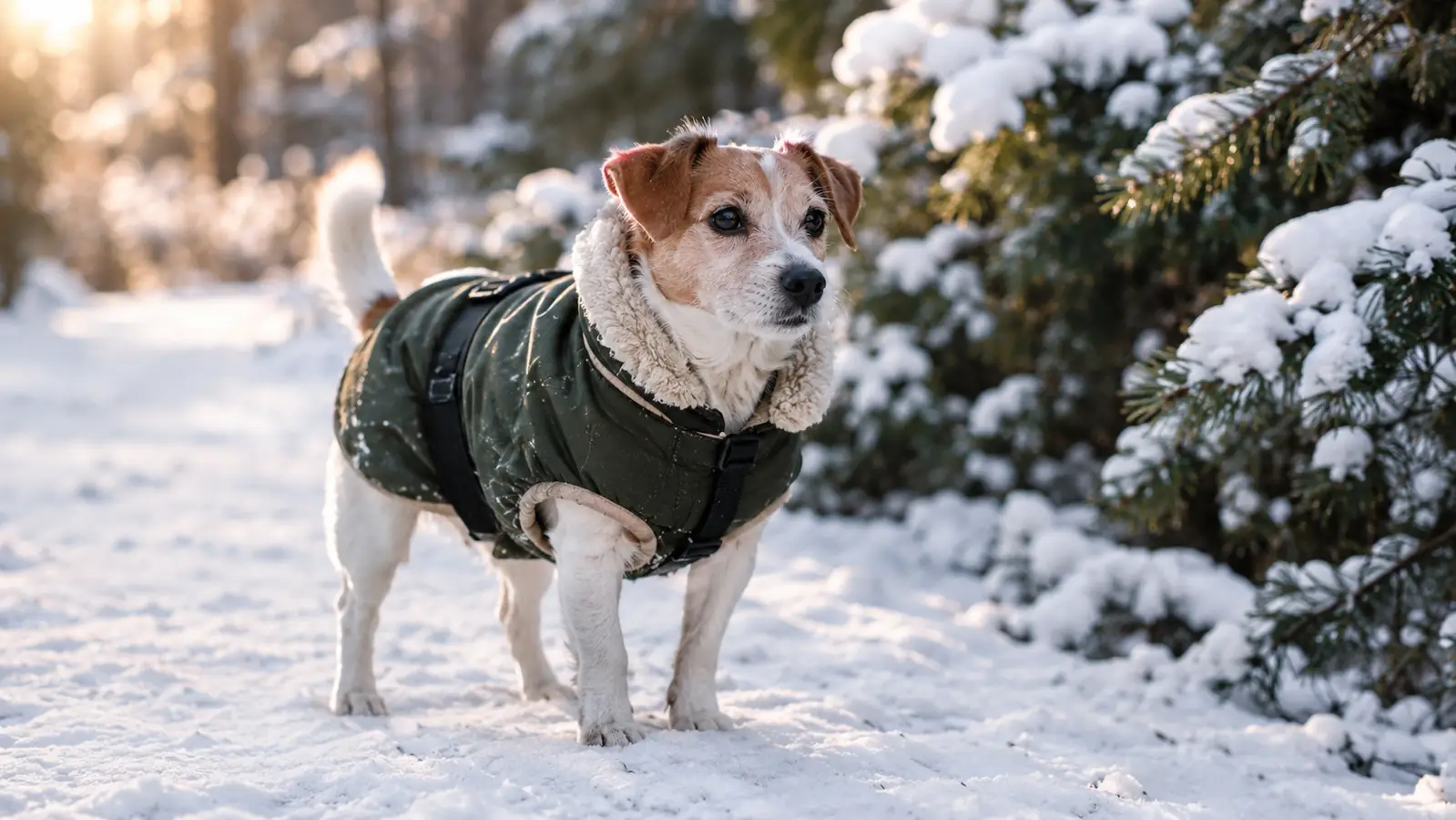
On the first snowy morning in late November, Pip took one look at the front yard and sat down, and then I zipped him into his brand-new Dogcheer coat for the very first time. A 13-pound Italian Greyhound with a thin short coat and almost no body fat has a firm opinion about snow, and his opinion was that the walk could wait until spring. I had hand-knit him a simple sweater years ago, and it was fine for the house, but it was not built for a mile of trail in falling snow. He stopped shivering before we reached the end of the first block.
It was not the first coat I looked at, but it kept coming back up in every search: insulated, a waterproof shell, a zipper that runs along the side instead of over the head, and a leash opening on the back so the harness can clip through. That coat changed the morning routine completely. This is the order that worked for us, in case you are standing in the pet aisle wondering where to start. It is not complicated. It is just specific.
The Coat That Got Pip Out the Door All Winter
Insulated, waterproof, with a side zipper and a leash opening for the harness. The Dogcheer winter coat is the piece I reach for on every snowy morning.
Amazon Check Today's Price on Amazon →Here is the exact order I use, from the measuring tape to the front door. Every dog is different, but the thinking stays the same: fit first, then the order of dressing, then the feet, then the cleanup. I will also tell you the part that surprised me: the dog, not the gear, is the one who enforces the routine. Once Pip understood that the coat meant a real walk instead of a quick trip to the yard, he started waiting by the door.
You need three things before you start: the coat, a set of four boots, and a small tin of paw wax. I would not bother with anything else at first. Buy the coat, measure the dog, and see how the morning walk goes. You can add the rest when you know what your dog actually needs.
Step 1: Measure the Chest Before You Order Anything
My first instinct was to order by back length, because that is how I shop for my own coats. For dogs, the chest is the number that matters. The Dogcheer size chart asks for the chest, taken around the widest part of the rib cage, just behind the front legs. I used a cloth measuring tape, the kind I keep in my sewing basket, because a metal tape is awkward around a wiggly dog. I measured Pip twice, held the tape snug but not tight, and ordered from the larger of the two numbers.
A coat that fits the back but is tight across the chest will ride up the moment the dog moves, or worse, make him walk stiffly. A coat that is too loose lets cold air in and slides sideways on a narrow dog. You can see it in the first ten steps, and then you are pulling it back into place for the whole walk. The chest measurement is the part that prevents that, and it is the difference between a coat you forget you are wearing and a coat you are constantly adjusting.
The Dogcheer fit on the first try, which does not happen often with pet clothes, especially for a dog shaped like Pip, deep chested and narrow through the waist. I expected to send it back and I did not. I also handled a few puffer jackets in a pet store around that time, and the insulation on the Dogcheer felt denser for the weight. That is the moment I started trusting the size chart instead of guessing.
Step 2: Put the Harness On First
The order of dressing matters more than you would think. The Dogcheer has a leash opening on the back for a harness, which means the harness goes on underneath the coat. If you clip a collar first and then try to get a coat over it, you will spend the whole walk fighting the collar and the coat at the same time. Pip wears a harness on every walk, snowy or not, so the coat had to work with the harness rather than against it. The coat has no hood, which I count as a feature, because a hood is one more thing to tangle.
So the order is always the same in our house: harness, then coat, then boots. The harness has to sit flat against the dog's body, or the coat will bunch up right over the shoulder blades, which is exactly where a coat needs to lie smooth. I use a harness rather than a collar for the simple reason that a small dog with a thin neck can slip a collar in snow, and I would rather not test that theory.
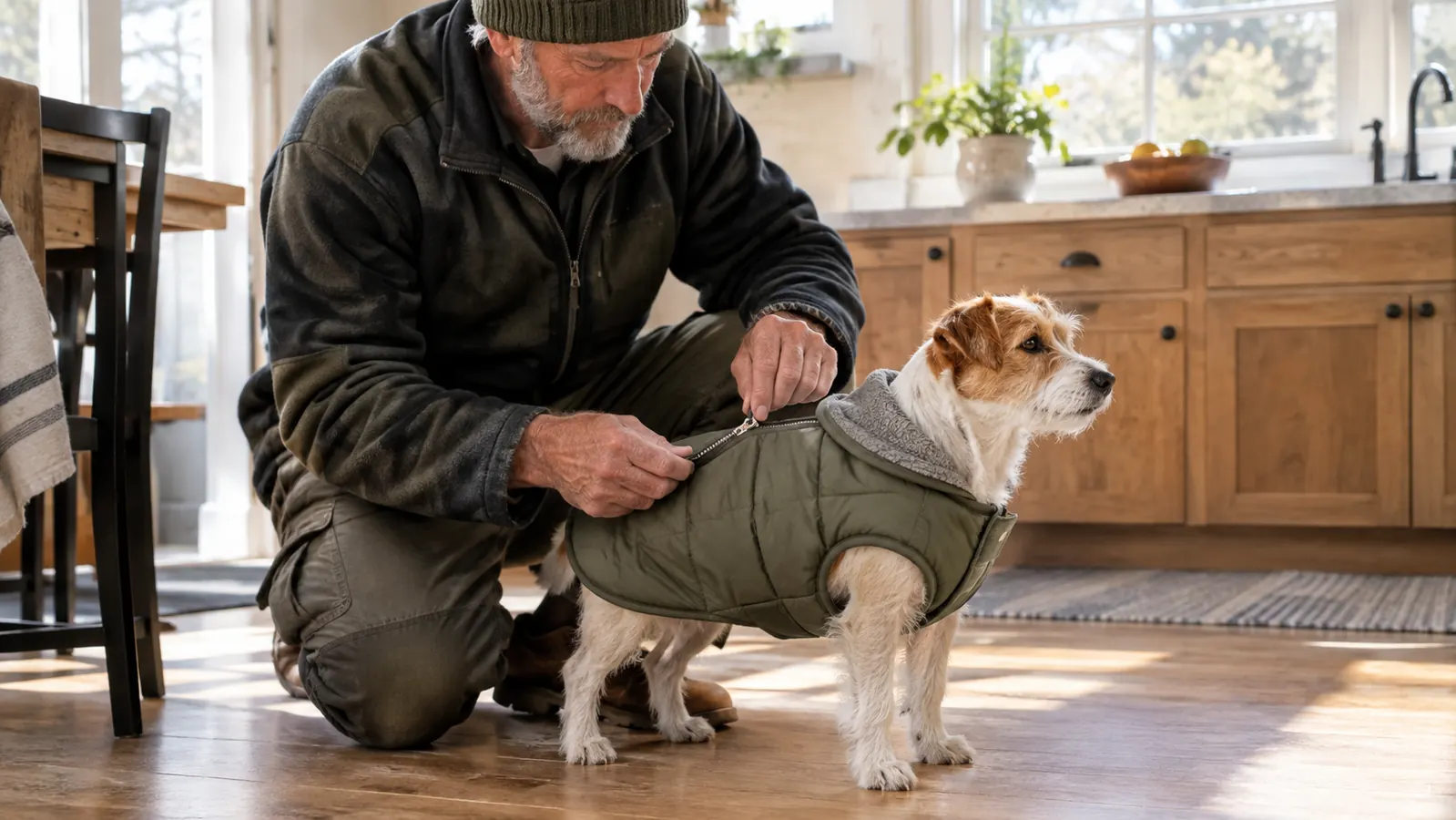
Once the harness is settled, the coat goes on over it and zips along the side. The leash clips through the opening on the back, so nothing has to be unbuckled and re-buckled at the door. That matters on a morning when the temperature is below freezing and the dog is dancing to get going. The whole dressing routine takes about two minutes, and the dog learns it fast.
Step 3: Zip It, Then Do the Two-Finger Test
The Dogcheer zips closed along the side, which was new to me after the fleece vest Pip wore in early November, the one that closes with a hook-and-loop strip across the back. A side zipper is easier to get straight, and there is no velcro to catch fine fur on the way out. I sewed well enough over the years to appreciate a zipper that does not bind.
After the zip is closed, I do the two-finger test. Slide two fingers flat between the coat and the chest. If you cannot get two fingers in, the coat is too tight and the dog will be uncomfortable on the walk. If you can fit a whole hand, it is too loose and cold air will pour in. Two fingers is the sweet spot, and it takes five seconds to check. I check it again halfway through the first walk, because a coat that fits in the driveway can shift by the time you reach the trail.
Then I let him move before we leave. The coat should not ride up over the back or slide sideways when he trots. Pip's first walk in the Dogcheer was the first real snow, late in November, and he stopped shivering within the first block. That was the fastest a fit test has ever passed in this house, and it is the reason I still measure the chest first instead of guessing.
Step 4: Don't Forget the Feet
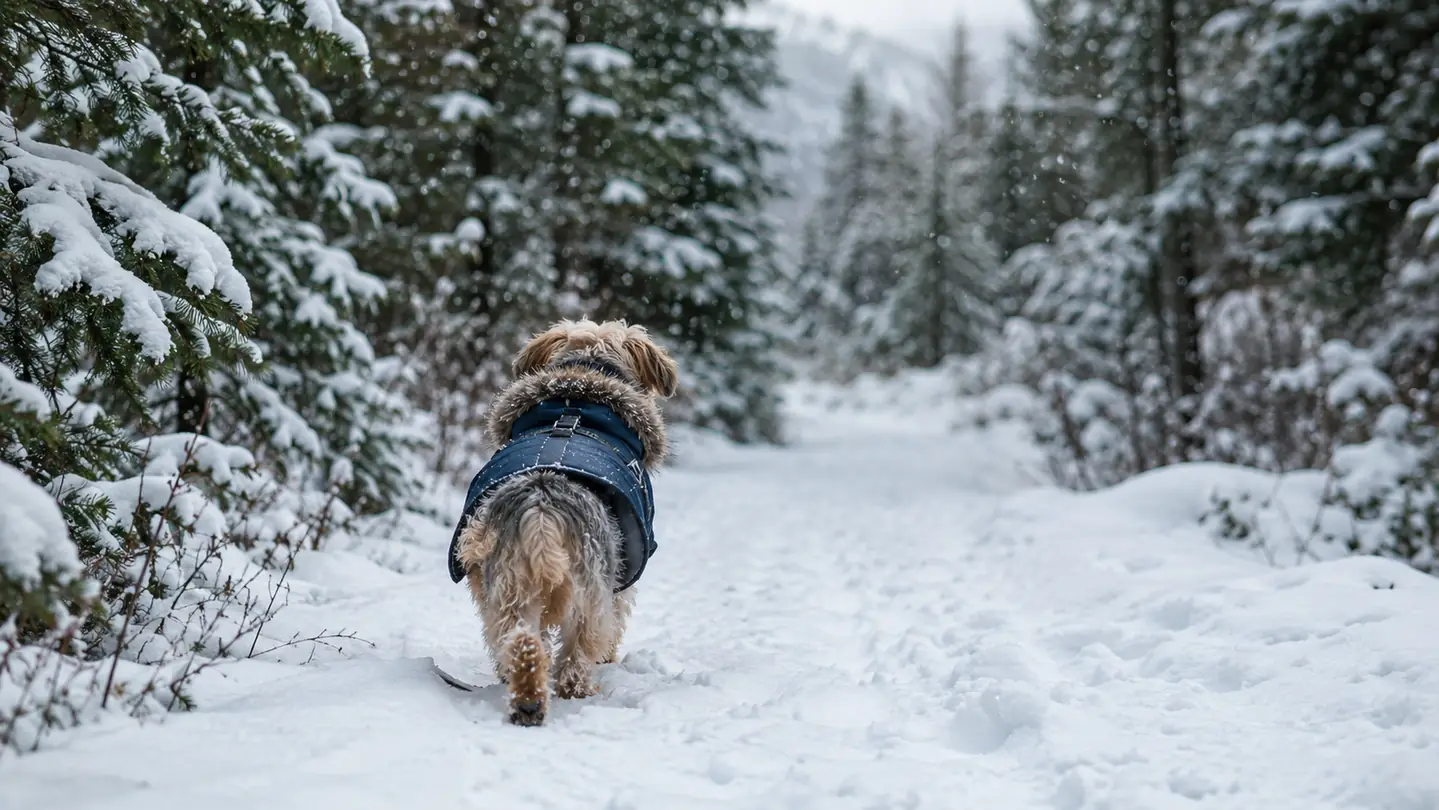
The coat covers the back, the chest, and part of the belly, but it does not cover the paws, and snow and sidewalk salt are a separate problem. I tried the coat alone for the first few weeks of snow, and his paws were fine in dry snow. It was the salted sidewalks, once the town trucks went through, that convinced me the boots were not optional. We added them in mid-December, and they became part of the routine on every snowy morning after that. The set came with four boots, reflective strips, hook-and-loop straps, and a sole that grips on packed snow.
The first couple of walks, Pip did the high step, lifting each foot like he was walking through something sticky. That lasted about three walks, and then he stopped noticing them. Exactly once, a boot came off in deep snow, and I found it a few steps back. Otherwise they stayed on, and his paws stayed dry. I mention the one lost boot because it is the honest version of the story, and it has not happened since.
On bare-paw days, I use paw wax instead, and the tin lives in my coat pocket so I never forget it. The coat and the boots together mean he gets the full mile, and I do not spend the last ten minutes carrying a shivering dog home. On the coldest mornings, that is the whole point of the routine.
Step 5: Wipe Everything Down When You Get Home
A snowy walk is wet work, and the care routine takes about five minutes. When we get back, I wipe the coat down with a damp cloth to get the salt and grit off, and I dry the boots before they go back in the basket by the door. The basket holds everything, so the wipe down happens while I am still standing there. Wet gear left in a heap will smell, and the salt will eat at the fabric over a season. A quick wipe is cheaper than replacing anything.
The Dogcheer has a waterproof shell, so snow brushes off and the inside stays dry. I machine washed it on gentle a few times over the winter and let it air dry, and it held its shape. For a piece of dog clothing that gets worn every single morning for four months, that is the part that surprised me most. I keep an eye on the zipper and the seam at the leash opening, and both are still going.
The whole routine, dress and undress and wipe down, takes about ten minutes a day. It is the difference between gear that lasts one season and gear that is still going when the snow melts, and between a dog who hides at the sight of the coat and a dog who waits by the door for it. Pip does the waiting now. And the coat goes on the hook, not folded in a drawer, so it is dry and ready for the next morning.
What Else Helps
A few other pieces earned their place in the rotation. The fleece vest Pip wore in early November is still the thing I reach for on a dry, cold morning when there is no snow on the ground. It covers his back, chest and sides, though not the belly, and it soaks through in real rain, so it is a cold-weather layer, not a wet-weather layer. On those dry mornings, the Dogcheer stays on its hook and the vest is enough.
And on the coldest nights, from early January on, Pip sleeps in a stretch onesie, which is easier than a blanket because he can move without tangling. It comes off easily for a late-night bathroom trip, which matters more than you would think at two in the morning. The coat, the boots, the vest and the onesie each do one job, and none of them tries to do all four. That is the whole lesson of dressing a short-coated dog for winter: one layer for the cold, one for the snow, one for the feet, and one for the nights. You do not need more gear than that.
One more thing I learned the slow way: put the gear where you can see it. Our basket sits by the back door, coat on top, boots inside, paw wax in my coat pocket. If the gear is easy, the routine happens. If it lives in a closet, the dog gets skipped on the days you are running late, and the skipped days are the cold ones.
He stopped shivering within the first block, which is the fastest a fit test has ever passed in this house.
Ready for the First Snow?
If you have a short-coated dog who dreads the cold, the Dogcheer winter coat is where I would start. Measure the chest first, follow the same order, and check today's price before the next storm.
Amazon Check Today's Price on Amazon →