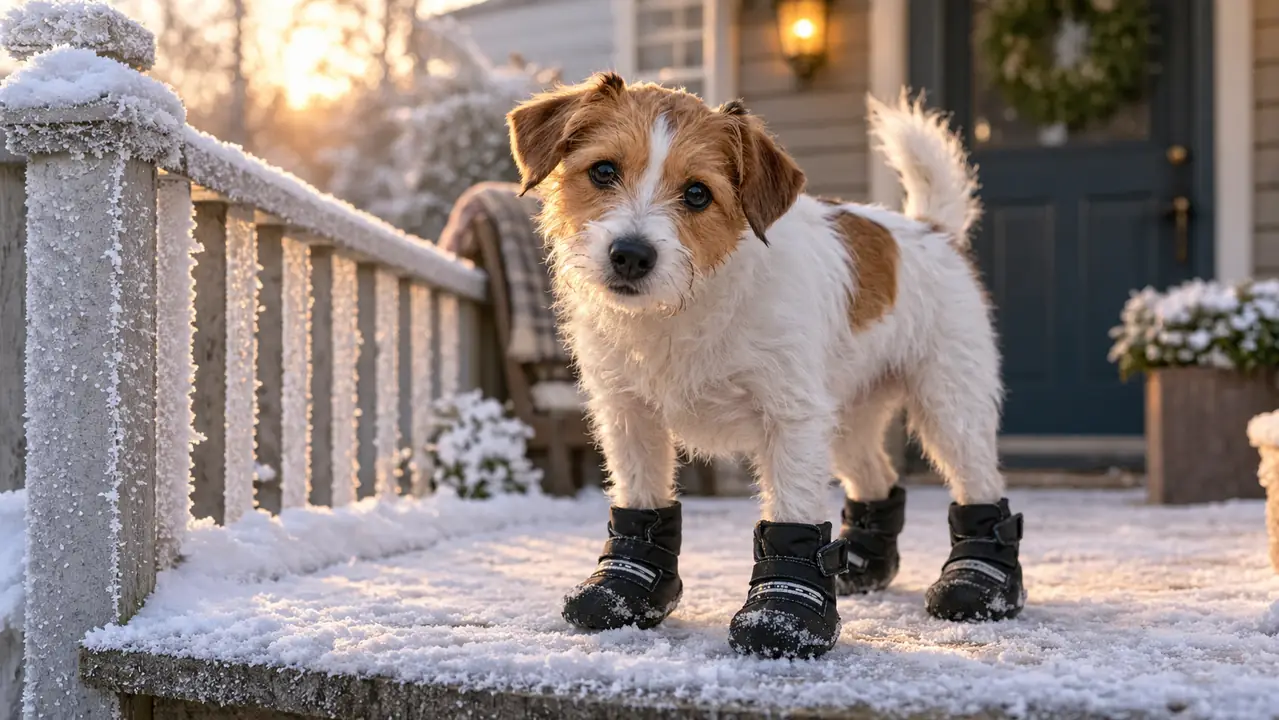
The first time I strapped a pair of QUMY dog boots onto Pip, he stood like a deer on ice. Actually, he stood like a 13-pound Italian Greyhound who had never felt anything on his feet, because that is exactly what he was. We live in Flagstaff, Arizona, where winter mornings sit well below freezing. By mid-December, the neighborhood trail was already salted, and Pip was lifting one paw after another and looking at me like I had broken the morning.
The salt was the reason. My husband Gene and I take Pip on the same one-mile loop every morning, about 25 minutes, and once the city salted the sidewalks, he could not make it two blocks without stopping. I had already tried the things people try first. I hand-knit him a sweater years ago, and this winter we bought a fleece vest and then an insulated coat. Those kept his back and chest warm, but nothing covered his feet.
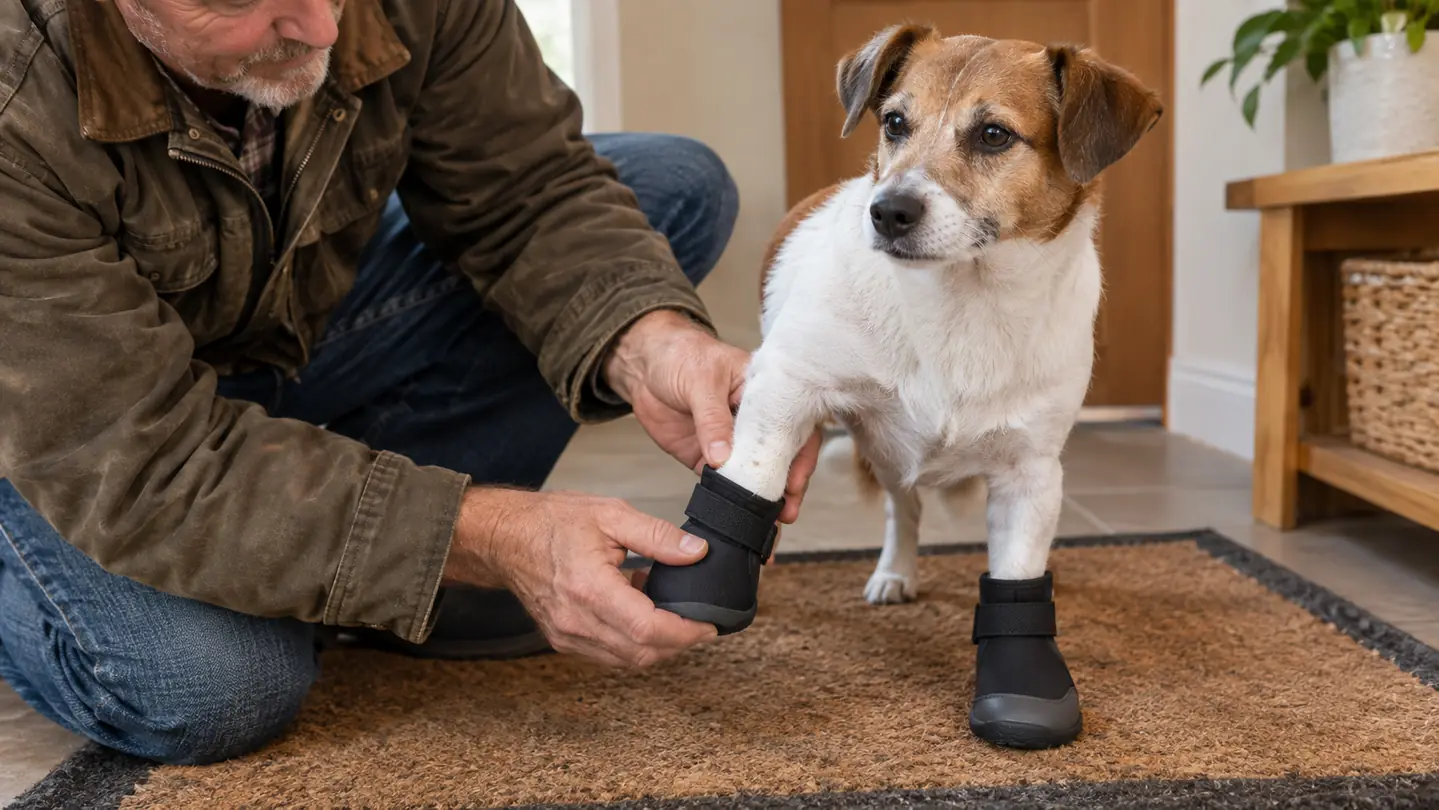
So I ordered a set of QUMY boots. They arrived as four separate boots with hook-and-loop straps, reflective strips, and a rugged sole. I did not expect much, honestly. I had read enough reviews to know that dog boots can slide off in deep snow or make a dog walk like a robot. I figured we would try them on a Saturday morning and see what happened.
The first attempt was clumsy. Pip lifted each foot high, shook it, and took three steps like a pony. That high-step lasted about three walks. By the fourth morning, he was walking normally, and the only time a boot came off all winter was once in deep snow. I found it a few steps behind him, brushed it off, and put it back on.
What mattered to me was simple. His paws stayed dry in the snow. When he came home, I did not have to towel off four wet feet or check for salt between his toes. On the bare-paw days, I keep a tin of paw wax in my coat pocket, but on snowy and salted mornings, the boots did the job.
I want to be clear about one thing before I go further. I am not someone who dresses a dog for fashion. Pip wears clothes because he is an Italian Greyhound with a thin short coat and almost no body fat. He shivers on any morning under about 50 degrees. If your dog is the same, boots are not about looking cute. They are about being able to finish the walk.
Exactly once, a boot came off in deep snow. I found it a few steps behind him, and that was the whole story.
Your dog's paws are telling you something. The QUMY boots were the fix for ours.
If your dog lifts paws on salted sidewalks or refuses to walk in snow, the QUMY boots are worth a look. Four boots, hook-and-loop straps, reflective strips, and a rugged sole that held up through a Flagstaff winter. See today's price on Amazon.
Amazon Check Today's Price on Amazon →Here is what surprised me. Pip is picky about his clothes. He refuses to go out in rain, he has opinions about seams and straps, and he will stand in the doorway and stare at me if a coat feels wrong. The QUMY boots did not bother him after the first few walks. He trotted ahead of me, ears up, and did his normal morning sniffing. That is the closest thing to a rave review a dog can give.
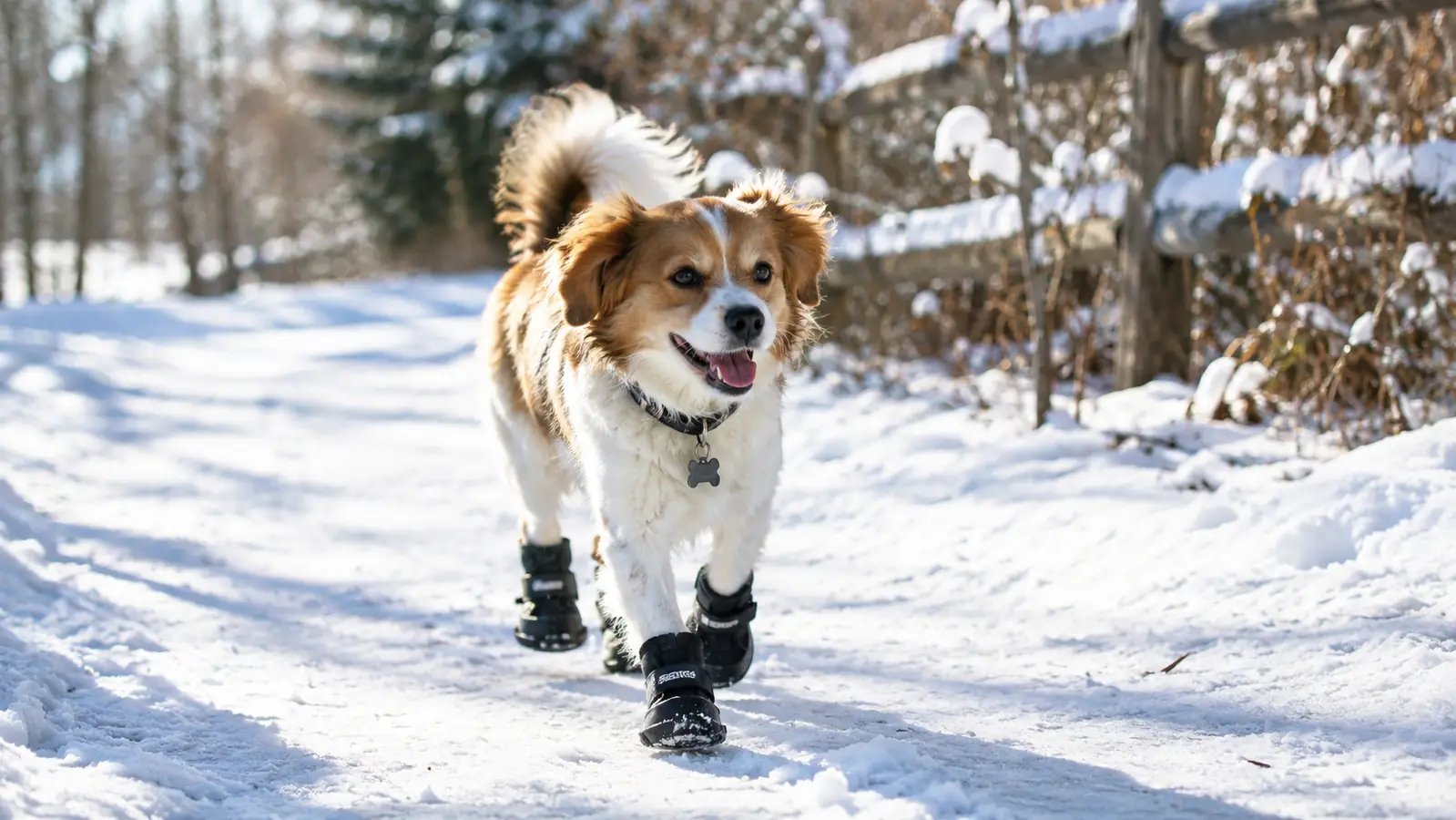
I also noticed the little things. The hook-and-loop straps did not come loose, which is the failure I worried about most. The reflective strips caught the dim winter light when we walked before sunrise. The soles had enough grip that Pip never slipped on the icy patches at the end of the driveway. For a small dog with thin legs, that mattered.
I cannot tell you they are perfect, because nothing is. The first few walks were silly, and you will need to check the fit if your dog has very narrow feet. Pip is 13 pounds, and the sizing worked for him, but I would measure carefully and read the size notes before ordering. I also would not call these a substitute for paw wax on dry days. On bare pavement, I still use the tin in my pocket.
Gene laughed the first morning. He stood on the porch with his coffee and watched Pip do the pony step, and he said we looked like we were running a tiny circus. By the end of the week, he was the one who reminded me to grab the boots from the mudroom before we headed out. That is how I knew they had stopped being a novelty.
The other thing worth knowing is that these are not magic. They do not make a cold walk warm, and they do not turn a dog who hates winter into a dog who loves it. What they did was remove the reason Pip stopped. His body was warm in his coat, his feet were dry in the boots, and the walk became possible again. That may sound like a small thing until you have spent a week trying to convince a small dog to go outside. Still, for a Flagstaff winter, the QUMY boots earned their place. We used them on every snowy or salted morning from mid-December through March, and they are still in the mudroom now, waiting for the next cold snap. Pip walks the whole mile, his feet stay dry, and I stop worrying about salt between his toes. That is what I wanted when I ordered them.
What I'd Tell You If We Were Sitting at My Kitchen Table
If you are trying to decide whether your dog needs boots, start with the sidewalk. Walk your usual route and watch what your dog does. If they lift their paws, stop, or try to turn around on salted ground, boots are not a luxury, they are the difference between a walk and a negotiation. Buy them before the first big snow, measure twice, and give your dog three walks to get used to them. And if the high-step makes you laugh, take a video. You will want it later.
Give your dog a dry, comfortable walk this winter.
Pip's paws stayed dry in the snow, and the boots mostly stayed on, even in deep snow. If that is what your mornings need, see today's price on Amazon.
Amazon Check Today's Price on Amazon →