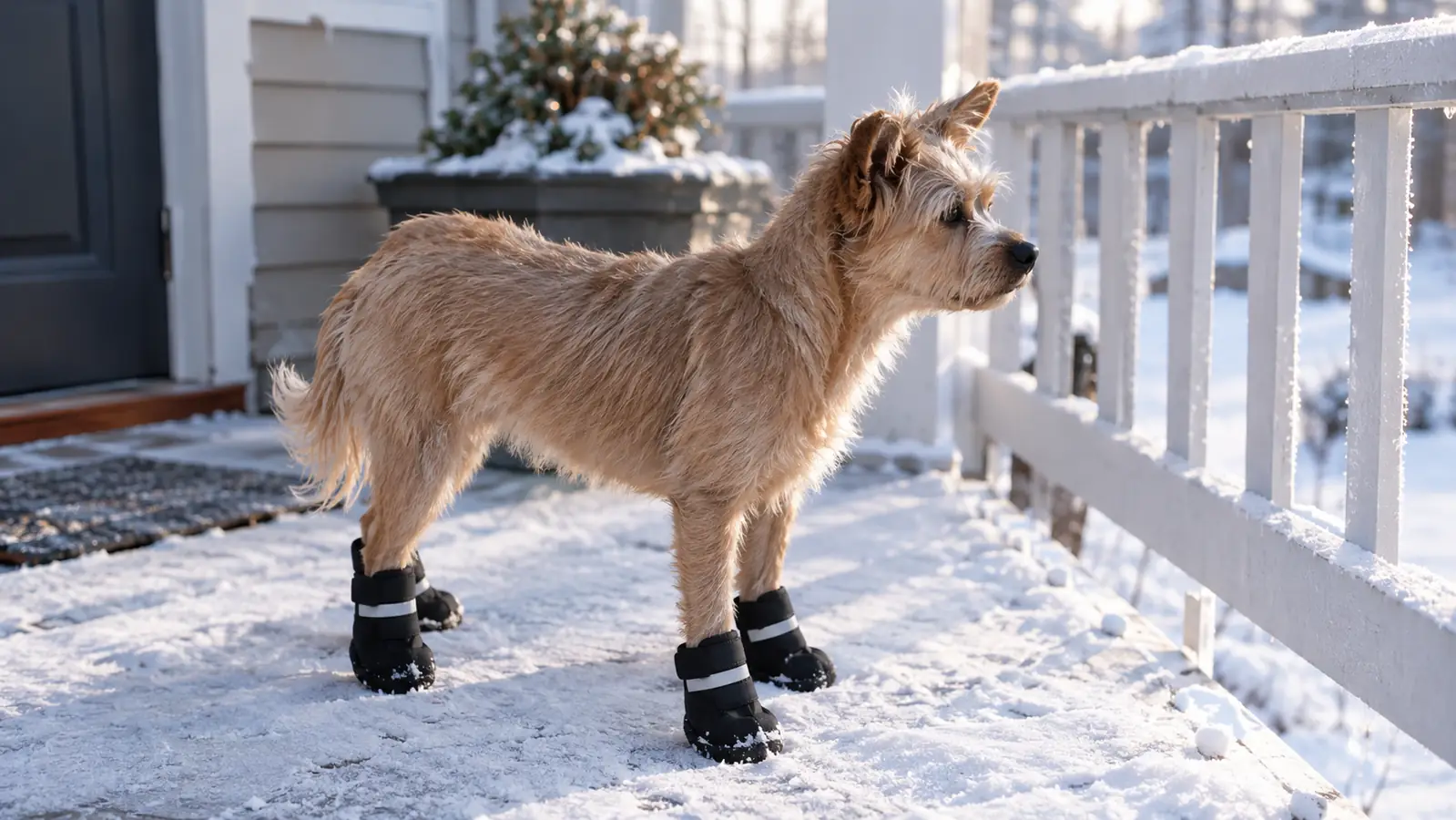
By mid-December in Flagstaff, the sidewalks turn into a patchwork of ice, packed snow, and salt. Pip, my seven-year-old Italian Greyhound, weighs about thirteen pounds and has the kind of thin coat that makes him shiver on any morning under fifty degrees. He would step out the front door, lift one paw, then another, and then simply stop. His body was warm inside the fleece vest and the insulated coat I had bought him earlier that fall. His feet, though, had nothing between them and the cold ground.
That is how I ended up ordering the QUMY Dog Shoes Snow Boots and Paw Protectors. The set of four boots comes with reflective strips, hook-and-loop straps, and a rugged sole. I was skeptical because Pip has legs like toothpicks and I had read plenty of stories about boots that slide off within a block. One winter of daily use later, I have a clear picture of what these boots do well, where they annoy me, and exactly who should buy them.
The Quick Verdict
For a small dog who needs to walk on snow and salted sidewalks, the QUMY boots stay on, keep paws dry, and make the morning walk possible. The cute high-step lasts only a few walks, and no boot will convince a dog who hates winter to love it, but these are the pair I reach for every icy morning.
Amazon Check Today's Price →The boots I reach for every icy morning
QUMY Dog Shoes Snow Boots and Paw Protectors kept Pip's paws dry through a full Flagstaff winter. Check today's price on Amazon and see if they are the right fit for your dog.
Amazon Check Today's Price on Amazon →How I've Used It
I started Pip in the QUMY boots in mid-December, right after the first salted sidewalks appeared. From then through March, he wore them on every snowy or salted morning walk, which was most mornings. Our route is the same one-mile loop around the neighborhood trail, about twenty-five minutes door to door. That is not a hard test, but it is a real one, repeated every single day. The boots had to go on fast, stay on for the whole walk, and come off without a fight.
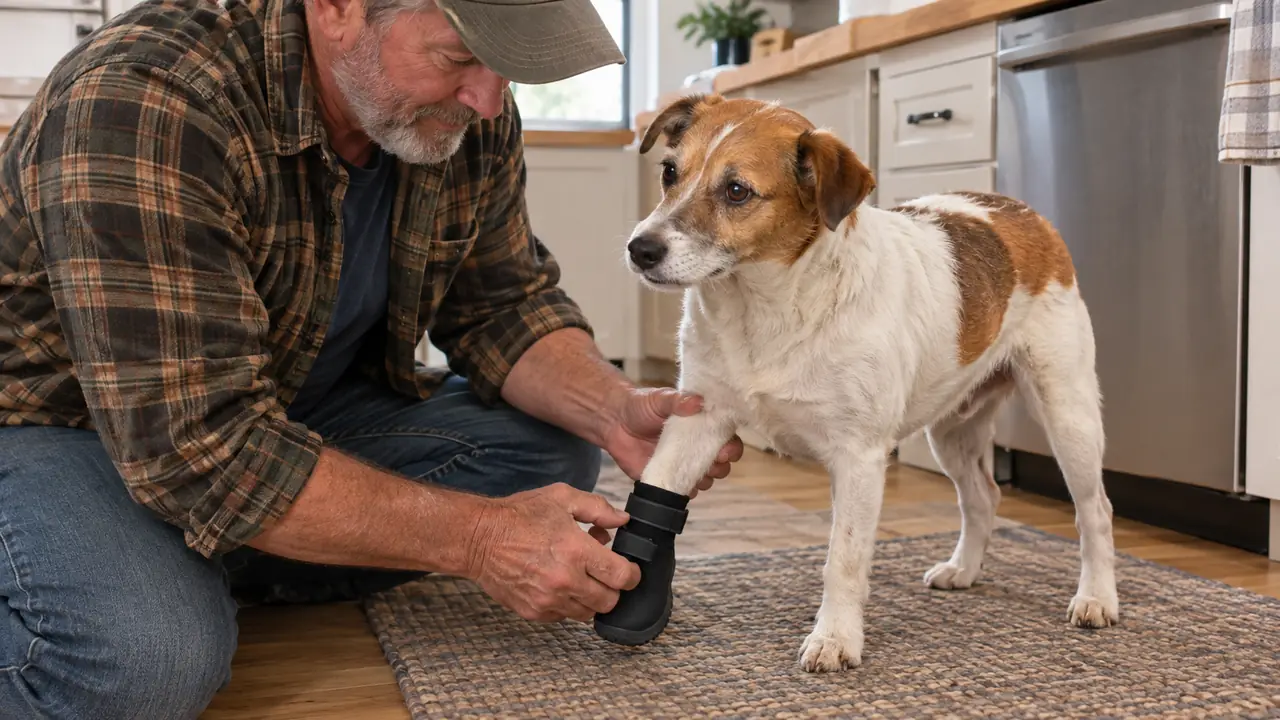
The first thing I noticed was how easy they are to put on. Each boot opens wide enough that I can slip Pip's paw in without bending or twisting his leg, then the hook-and-loop straps wrap around his ankle and hold. I check the tightness before we head out because a boot that is too loose will twist, and a boot that is too tight will bother him. It took me about two mornings to find the right fit, and after that the routine took under two minutes for all four paws.
Pip's paws stayed dry in snow, which was the whole point. The rugged sole gave him traction on packed ice and the reflective strips showed up nicely on the darker winter mornings. The high-step lasted about three walks. That is the bouncy, exaggerated gait some dogs do when they first wear boots, and it was gone quickly. After that he walked normally, which is exactly what I wanted.
I also learned the order: harness, then coat, then boots. The coat covers his back and chest, and it made the ankle straps harder to reach when it was already in place. Once I switched the order, the whole routine got faster. It is the kind of small detail that does not show up in a product listing, but it matters when you are standing in a cold doorway at seven in the morning.
What I Liked About the QUMY Boots
The biggest win is that they stay on. I had read reviews from owners who said their dog's boots came off in the first snowbank, so I braced for that. In a full winter of daily use, a boot came off exactly once, in deep snow, and I found it a few steps away. That is a far better record than I expected from a set of four boots with simple straps.
The second win is dry paws. Pip's paws were dry after every snowy walk. When we got home, I would wipe the soles on the mat and they were ready for the next morning. The rugged sole also seemed to protect him from the sharp edges of frozen snow, and he stopped doing the paw-lift dance within the first week. I sew a little myself, so I also checked the stitching on the straps the way I would check a seam I was about to reinforce. Nothing has pulled loose.
I also appreciate the reflective strips. Our morning walks start before the sun is fully up in December, and cars on the neighborhood streets need to see a small dog at ankle height. The strips are not a substitute for a light, but they add a layer of visibility that I did not have with bare paws.
Cleaning is simple. I keep a damp rag by the door, wipe the soles after each walk, and let them air dry. I never put them in the washing machine, because I did not want to risk the straps; a rinse in the sink every couple of weeks has been plenty.
Where the QUMY Boots Fell Short
Nothing about these boots is perfect, and I would not want anyone to buy them expecting perfection. The most obvious quirk is the high-step. Pip did the exaggerated march for the first three walks, and it was a little funny and a little sad at the same time. Gene found the high-step hilarious, which Pip did not appreciate. He was not in pain, just confused about why his feet suddenly felt different. The gait disappeared quickly, but anyone with a sensitive dog should expect a few awkward days.
The straps need checking before every walk. They are hook-and-loop, which means they can work loose over time. I got into the habit of tugging each one before we left the house. On one especially cold morning I skipped the check and a boot twisted sideways halfway through the loop. It did not come off, but Pip walked funny until I stopped and fixed it.
Size is the other thing to get right. I ordered based on the size chart and the first pair fit, but I can see how a dog with very narrow ankles would be a challenge. The straps are long enough to adjust, but there is a limit. If the boot is too big, it will rotate. If it is too small, it will pinch. Measure carefully and read the reviews from owners with a similar breed.
How the QUMY Boots Fit Into Our Winter Routine
By the end of January, the routine was set. On bare, dry mornings, Pip went out with just his fleece vest, and I kept a tin of paw wax in my coat pocket for the cold sidewalk. On snowy or salted mornings, he wore the QUMY boots. The two approaches covered every kind of weather Flagstaff threw at us, and I never felt like I needed a different product.
We still used paw wax on bare-paw days, because a thin layer of wax is faster than boots when the ground is merely cold but dry. The boots came out when the ground was wet, icy, or salted. That division of labor worked well. The boots are not a replacement for paw wax and paw wax is not a replacement for boots. They solve different problems.
This matters because I had originally hoped one product would do everything. It does not. On a slushy morning, wax alone left Pip's paws wet and cold. On a dry but freezing morning, boots felt like more than he needed. Having both options meant I could match the gear to the day.
How the Boots Held Up Over the Season
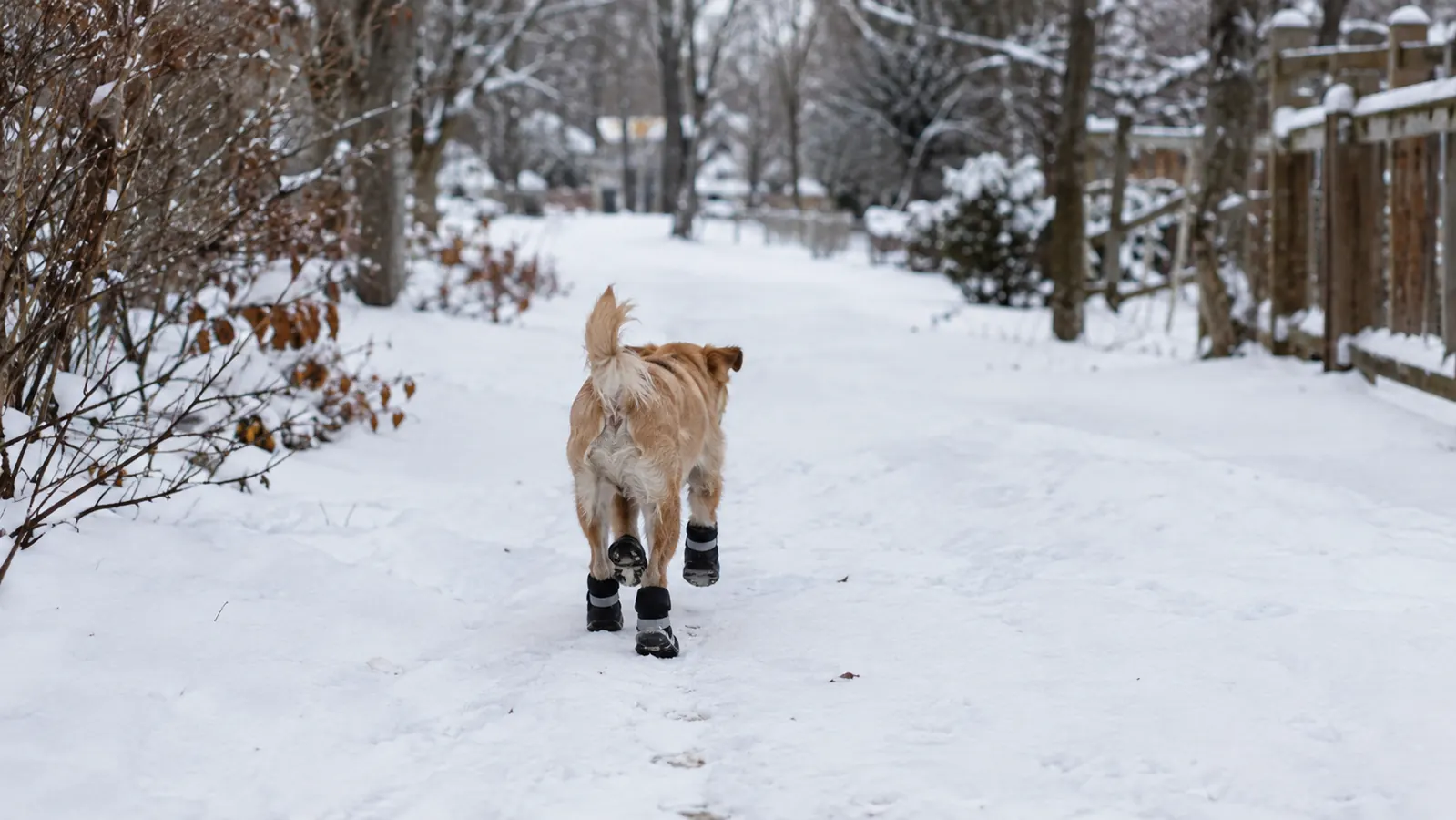
After roughly three months of near-daily use, the QUMY boots have held up well. The rugged soles show some scuffing from walking on bare pavement when the snow melted, but there are no holes, no torn straps, and no broken seams. I wipe them down after wet walks and let them dry by the door, and they are ready for the next morning.
The reflective strips still reflect. That was the detail I was most worried about, because reflective trim is often the first thing to peel or fade. These have stayed put through snow, slush, and the occasional puddle. For a single season of daily use, they have done exactly what they promised.
The only real wear I noticed was on the inside of the boots, where Pip's nails brush against the fabric. It is not enough to affect how they fit or how they protect, but owners who walk a lot on pavement should keep an eye on that spot.
In a full winter of daily use, a boot came off exactly once, and I found it a few steps away.
What I'd Change or Watch Out For
If I could change one thing, it would be the strap system. Hook-and-loop is easy and reliable, but I would love a slightly wider strap or a second strap for dogs with very slim ankles. Pip never lost a boot after the first fitting, but I checked them constantly, and I think other owners of sighthounds should expect to do the same.
I would also tell new owners to practice indoors first. Put the boots on in the living room, let the dog walk around on a rug for a few minutes, and offer a treat. That short session saved us a lot of frustration on the first morning walk. It also gave me a chance to see where the straps sat before we were standing on ice.
Finally, do not expect the boots to fix a dog's feelings about winter. Pip still shivers when the wind picks up, and he still turns around at the end of the driveway sometimes. The boots made the walk possible, but they did not turn him into a snow dog. That is okay. I did not need him to love winter. I needed him to get through it with dry paws.
What I Liked
- Stayed on through a full winter, even in deep snow
- Kept paws dry on snowy and salted sidewalks
- Rugged sole gives traction on ice and frozen snow
- Reflective strips add visibility on dark mornings
- Easy to put on and take off
Where It Falls Short
- High-step gait lasted about three walks
- Straps need checking before every walk
- Not ideal for dogs with very narrow ankles
- No boot replaces paw wax on dry, cold days
Who This Is For
The QUMY boots are for owners of small dogs who need to walk on snow, ice, and salted sidewalks. If your dog lifts its paws, stops walking, or seems miserable on cold mornings, these boots give you a way to get out the door without a daily battle. They are especially useful for dogs like Pip, who have thin coats and no body fat but still need their exercise.
They are also for people who want a simple, no-fuss boot. The hook-and-loop straps are easy to adjust, the rugged sole gives real traction, and the reflective strips add visibility. If you are willing to spend a few mornings helping your dog get used to the feeling, these boots will likely earn a permanent spot in your winter gear.
Who Should Skip It
If your dog refuses to wear anything on its feet, no boot is going to change that. Pip is a cooperative dog, and it still took three walks for him to stop marching like a parade pony. A dog that panics at the feeling of boots may do better with paw wax or with a different approach entirely.
Skip these if you only need protection for a dry, cold sidewalk. On days when the ground is bare, paw wax is faster, quieter, and takes up less space in a coat pocket. The boots are at their best when the ground is wet, icy, or salted, and they are more gear than you need for a simple frosty morning.
These are also not the right choice if your dog spends most of the winter indoors and only goes out for quick bathroom trips. For a fast dash into the yard, boots are more trouble than they are worth. Pip still goes out barefoot for the two-minute trips, and I only pull the boots out for the real walk.
If you live where winter means snow and salt, and your dog is small enough to feel every degree of cold, the QUMY boots are worth trying. They are not perfect, but they do the one thing that matters most: they keep your dog's paws dry and get you both through the walk.
Ready for a winter without frozen paws?
QUMY Dog Shoes Snow Boots and Paw Protectors saw us through an entire Flagstaff winter. If your dog dreads the cold ground, these boots are worth a look. Check today's price on Amazon.
Amazon Check Today's Price on Amazon →