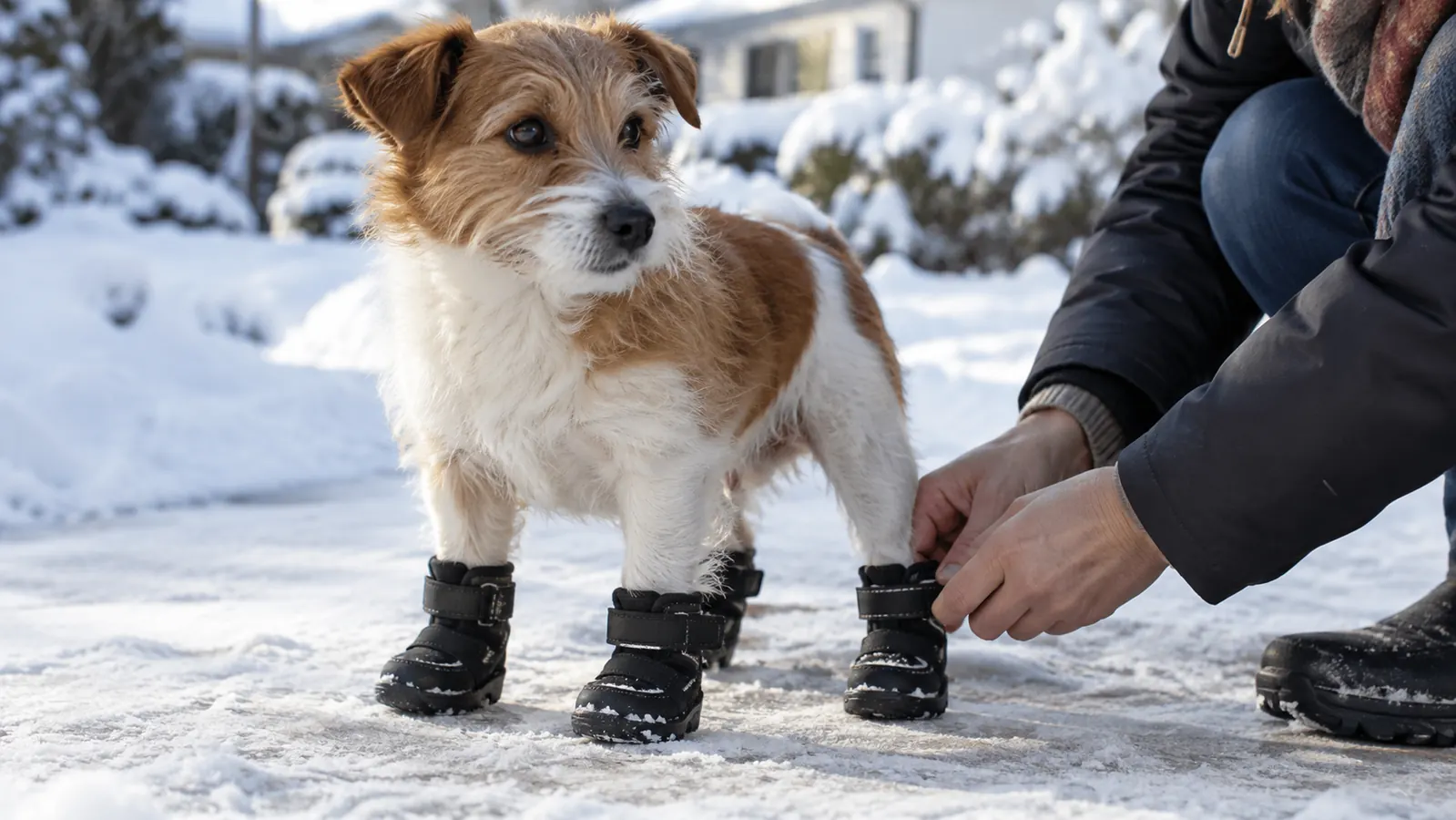
The middle of December in Flagstaff is when the trail behind our house stops being dirt and starts being a frozen, salted crust. My Italian Greyhound Pip is seven years old and weighs about 13 pounds, with thin legs and almost no body fat, so cold mornings were always a negotiation. The morning I knew we needed something for his feet, the temperature had not made it above 12 degrees, and the sidewalk had been salted the night before. Pip took three steps, lifted his front paw, shook it, took two more steps, and lifted the other one. By the time we reached the corner he was walking like the ground was made of hot coals, so I carried him the rest of the way home. I tried a few things that week. I tried shorter walks, which just meant a sad dog staring at me from the back door. I tried wiping his paws with a warm cloth when we came in, which helped afterward but did nothing for the walk itself. Then I ordered the QUMY dog boots, and I also picked up a small tin of paw wax at the pet store, because I was not sure which would work and I did not want to wait another cold morning to find out. The boots arrived mid-December, the wax went into my coat pocket, and for the next three months I used one or the other on almost every single walk.
The short answer is that they are not really rivals, and that is the thing I wish someone had told me before winter. The QUMY boots won every snowy and salted morning, because they put a barrier between Pip's pads and the ground, and apart from one boot lost once in deep snow, they stayed on for the full one-mile loop. The paw wax won the quick trips, the 6 AM dashes into the back yard, and the days he simply refused to let me near his feet with a boot. If you can only buy one and your winter looks like mine, buy the boots. But keep reading, because the wax is the difference between a tool you use and a tool you resent, and I would not want to be without either one. The table below shows how they stack up, and the rest of this article walks through the mornings that taught me which one to reach for, including the January morning when I made the wrong call and carried a cold dog home.
| QUMY Dog Boots | Paw Wax | |
|---|---|---|
| Snow and ice protection | Rugged sole and full coverage kept paws dry in snow that covered the ankle | Adds a coating, but paws still get wet on walks past a few minutes |
| Salt and sidewalk chemicals | Full barrier between the pad and the salted pavement | Coats the pad but wears off and needs reapplication |
| Staying on during the walk | Stayed on for the full one-mile loop, except one boot lost once in deep snow | Wears off before a long walk is done |
| Ease of putting on | A few minutes at first, seconds by the third week | Thirty seconds, no fuss, works on a squirmy dog |
| Quick bathroom trips | More boot than a 6 AM dash needs | Perfect for a two-minute trip outside |
| Coverage | Covers the whole paw and up the leg | Only covers the pads |
| Grip on frosty steps | Solid grip from the sole once the boots are on | A quick dab helps on a slick back step |
| Best for | Snowy and salted mornings, icy trails, longer walks | Quick trips, dogs who hate boots, bare-paw days |
Where QUMY Wins
The QUMY boots won the mornings that matter most, and one morning in January proved it to me for good. The temperature was 8 degrees, the sky was clear, and the pavement was dry, so I skipped the boots and swiped wax on Pip's pads instead. It seemed like the sensible call at the time. We made it half a mile before he started lifting his paws again, first the front, then the back, then the front again, and I carried him the last two blocks with his cold feet tucked inside my coat. The next morning the boots went on without a word from either of us. That was the day I stopped treating wax and boots as interchangeable. The boots are for walking. The wax is for everything else, and everything else turned out to be a much smaller job than I expected.
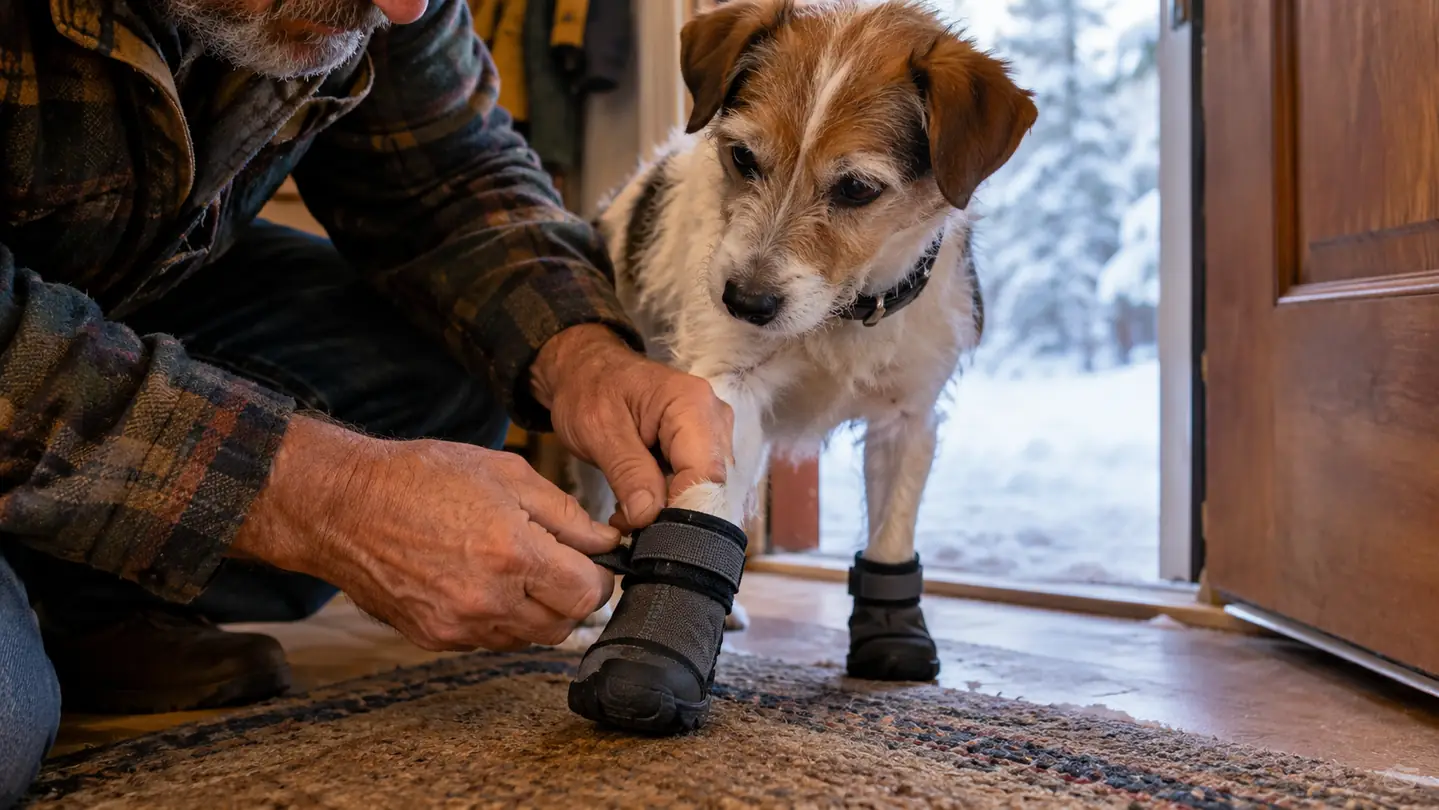
Here is what the boots do that wax cannot. They put a physical barrier between Pip's pads and whatever is on the ground, whether that is salt crystals, sand, or snow that comes up over his ankles. The rugged sole sits under his pad, the hook-and-loop straps hold the boot around his thin leg, and the reflective strips catch the dim morning light when we start out before sunrise. When we got home, I checked his paws every single day, and not once in the whole winter did I find a wet paw inside a boot. That was the detail that convinced me the boots were doing the real work. The wax kept his pads from drying out, but the boots kept him comfortable enough to actually enjoy the walk, and for a dog who spends the whole winter shivering, that is everything.
The one time a boot came off is worth telling you about, because it tells you something about the fit. We were in deep snow, the kind that comes up over a small dog's ankles, and Pip was bounding through it. When we got to the corner I saw one boot missing. I walked back along our path and found it a few steps back, sitting on top of the snow like it had simply stepped out. I put it back on, snugged the strap one notch tighter, and it never happened again. My husband Gene laughed the first time he watched Pip do the high-step, marching around the kitchen like a little pony. He stopped laughing by the fourth walk, when Pip trotted past him on the trail without a second thought. That was the only boot incident in the whole winter, and one set of four boots carried him from mid-December through March.
The day after a storm dumped six inches of snow, the trail crew had plowed and salted the path, and Pip walked the entire mile without stopping once. Before the boots, that walk would have taken twice as long and ended with me carrying a shivering dog the last two blocks. He trotted ahead of me like the cold was nothing, and I realized the boots were not just protecting his feet. They were giving him back his walks.
Where Paw Wax Wins
The paw wax won the mornings that did not deserve a full boot operation. There were plenty of days when the forecast said clear and cold, the pavement was dry, and Pip only needed a quick trip to the back yard and back. On those days the wax was perfect. Thirty seconds, a dab on each pad, and he was out the door. No straps to adjust, no high-step, no convincing a small dog that the things on his feet were not going to hurt him. The tin is small enough to fit in a coat pocket, and the wax itself has a soft, balmy texture that warms up in your hand. Pip seemed to tolerate it better than boots, probably because it did not change the way his feet felt on the ground. When a dog is dancing on his toes at 6 AM because he needs to go out, the last thing you want is a five-minute boot session.
The wax also wins for a dog who simply will not wear boots. I know dogs who refuse to take a single step in anything on their feet, and for those dogs wax is a real answer. It coats the pad, adds a little grip on icy steps, and it protects against salt for a short outing. One morning in February, the back steps were slick with a thin layer of frost, and Pip came down them like they were made of ice, which they were. A little extra wax on his front paws that week made a real difference on that smooth surface. It is not a substitute for boots on a walk, but on the small moments of a winter day it earned its place in my pocket.
But I have to be honest about its limits, because the wax has a specific job and it stops working past a certain point. On the one-mile loop, the wax wore off before we got home, and Pip's paws were cold by the last quarter mile. He would start lifting his paws again, the same way he did before we owned any of this, and I would end up carrying him. On the days I forgot the tin at home, I noticed the difference within a block, because his paws would start coming up again. It was the quickest reminder I got all winter that the wax was doing something real, even if it was not enough for the full loop. It is a barrier, not a boot. For the doorstep dash it is perfect. For the trail it is not enough, and that is exactly why both things lived in my coat pocket all winter. The wax earned its place, but it never once let me skip the boots on a morning that mattered.
The boots that carried Pip through a Flagstaff winter
From mid-December through March, the QUMY boots handled snow, ice, and salted sidewalks on the morning loop. One set covered all four paws, and they stayed on. Check today's price on Amazon and compare the size chart to your dog's paw measurements.
Amazon Check Today's Price on Amazon →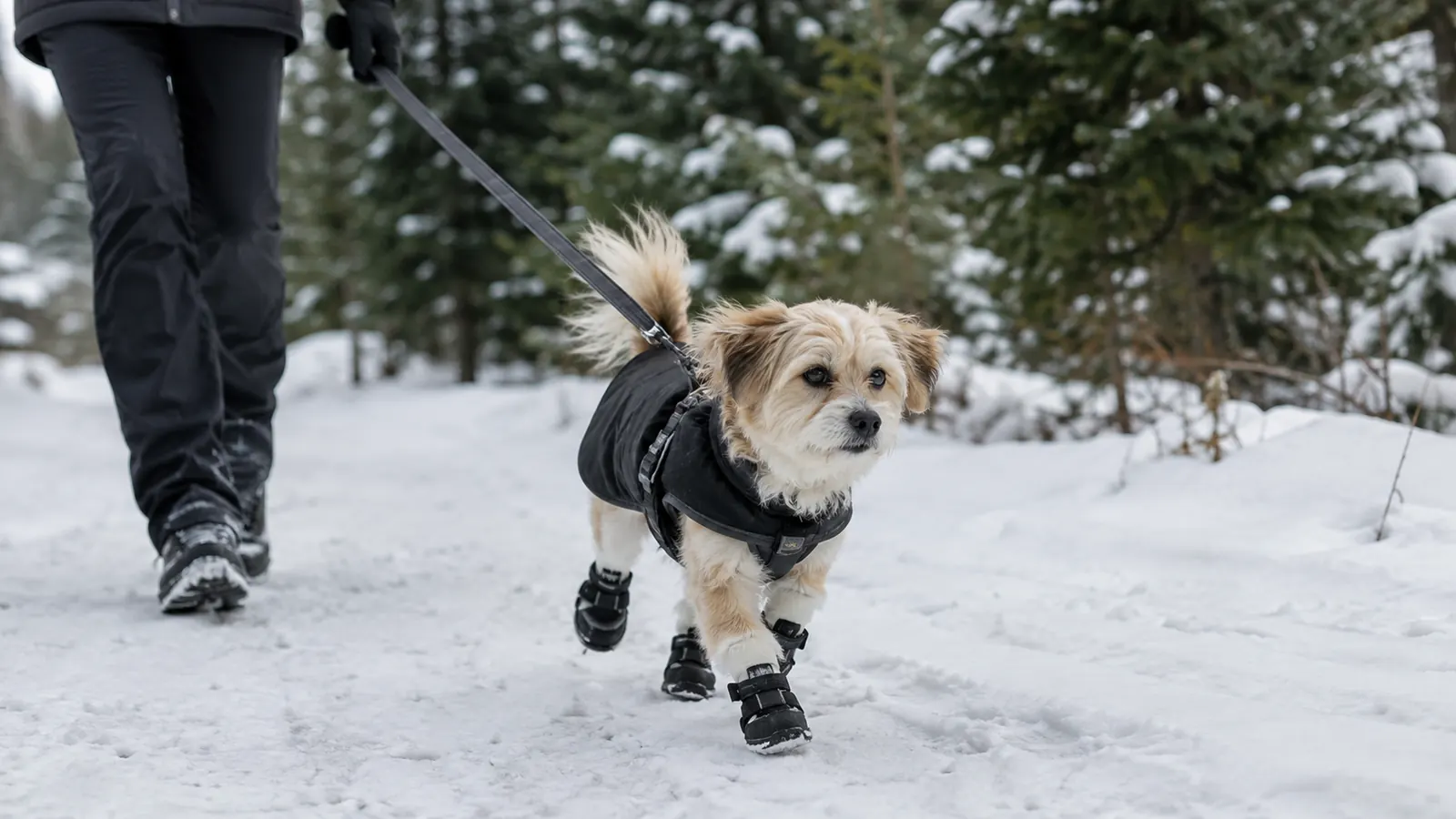
Who Should Buy Which
Buy the QUMY boots if your winter includes snow, ice, or salted sidewalks, if your dog will tolerate wearing them, and if you want to walk for more than five minutes without thinking about paws. They are the difference between a dog who stops every ten feet to lift a paw and a dog who trots the whole loop with dry feet. Measure your dog's paws before you order, because the fit decides everything. The hook-and-loop straps give you some room to adjust, which mattered for Pip's thin Italian Greyhound legs, and one set of four boots carried him from mid-December through March. If your dog has never worn boots, do what I did: put them on indoors for a few minutes at a time, let him walk around the kitchen, and give him a few days before the real test. Pip needed about three walks before the high-step disappeared, and after that the boots were just part of the morning.
Buy the paw wax if your dog will not wear boots, if you only need protection for quick trips outside, or if you want a backup that lives in your coat pocket for bare-paw days. It is also the smarter first purchase if you are not sure your dog will accept boots at all, because a tin of wax is an easy thing to try before you commit to a set of four boots. And honestly, most people I know end up with both. The boots for the real winter mornings, the wax for everything else. If I had to pick one and only one, I would pick the boots, because they solve the worst days, and the worst days are the ones that make a small dog miserable. But I would not want to give up the wax either, and I think most people who live where the sidewalks get salted will land in the same place. It is not an either-or decision, and the sooner you stop treating it like one, the happier your dog's feet will be.
The honest version of my advice is this: if you are standing in the pet aisle trying to decide, buy the boots first and treat the wax as the backup. The boots do the job nothing else can do on a snowy morning. The wax does a smaller job, but it does it with zero fuss, and there is room in your coat pocket for both.
One set, one winter, dry paws every morning
If your winter looks like a Flagstaff winter, the QUMY boots are the tool that actually stays on. See today's price on Amazon and read the sizing notes before you order.
Amazon Check Today's Price on Amazon →