
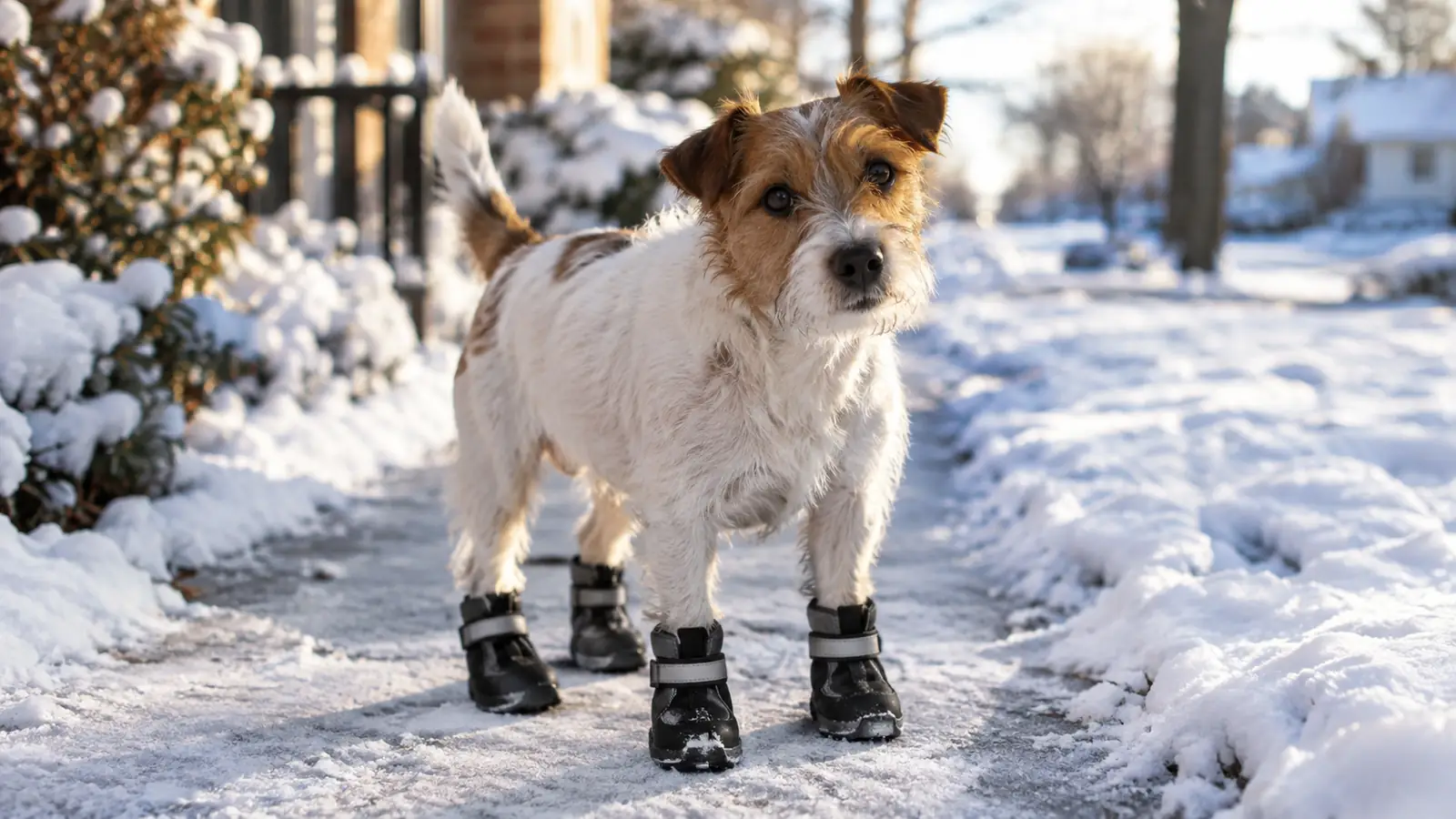
If you have a thin-coated dog, you know the winter morning dance. You open the door, your dog takes one look at the salted sidewalk, and plants all four feet like a mule. That was Pip every snowy morning that December, and it is exactly why I ordered the QUMY Dog Shoes Snow Boots and Paw Protectors. I want to tell you what happened next, because most of what I read before buying them did not match my experience at all.
I am Delia, a retired school librarian in Flagstaff, Arizona. Pip is my seven-year-old Italian Greyhound, about thirteen pounds of thin coat and no body fat. He shivers on any morning under about fifty degrees and he hates salt on his paws. So this is not a review from someone who tried boots once and gave up. This is what I learned from mid-December to March of real morning walks, including the parts I would rather not admit.
The Quick Verdict
The QUMY boots are the best paw protection I found for salted sidewalks, and they stay on far better than I expected. They are not perfect: the high-step phase is real, and one boot did come off in deep snow. For a dog who refuses to walk on salt, I would still buy them again.
Amazon Check Today's Price →The boots that got Pip walking on salted sidewalks again
After a winter of snowy mornings, the QUMY boots are the reason our morning walks still happen in January. If your dog does the same frozen-paw stop, this is the set I would start with.
Amazon Check Today's Price on Amazon →How I Used Them
I ordered the QUMY boots in mid-December, after the first salted sidewalks appeared. Our routine is the same every morning: a one-mile loop on the neighborhood trail, about twenty-five minutes. Before the boots, that walk involved me carrying Pip over the salted sections and him doing a ridiculous high-step dance on the clean parts. It was not working for either of us.
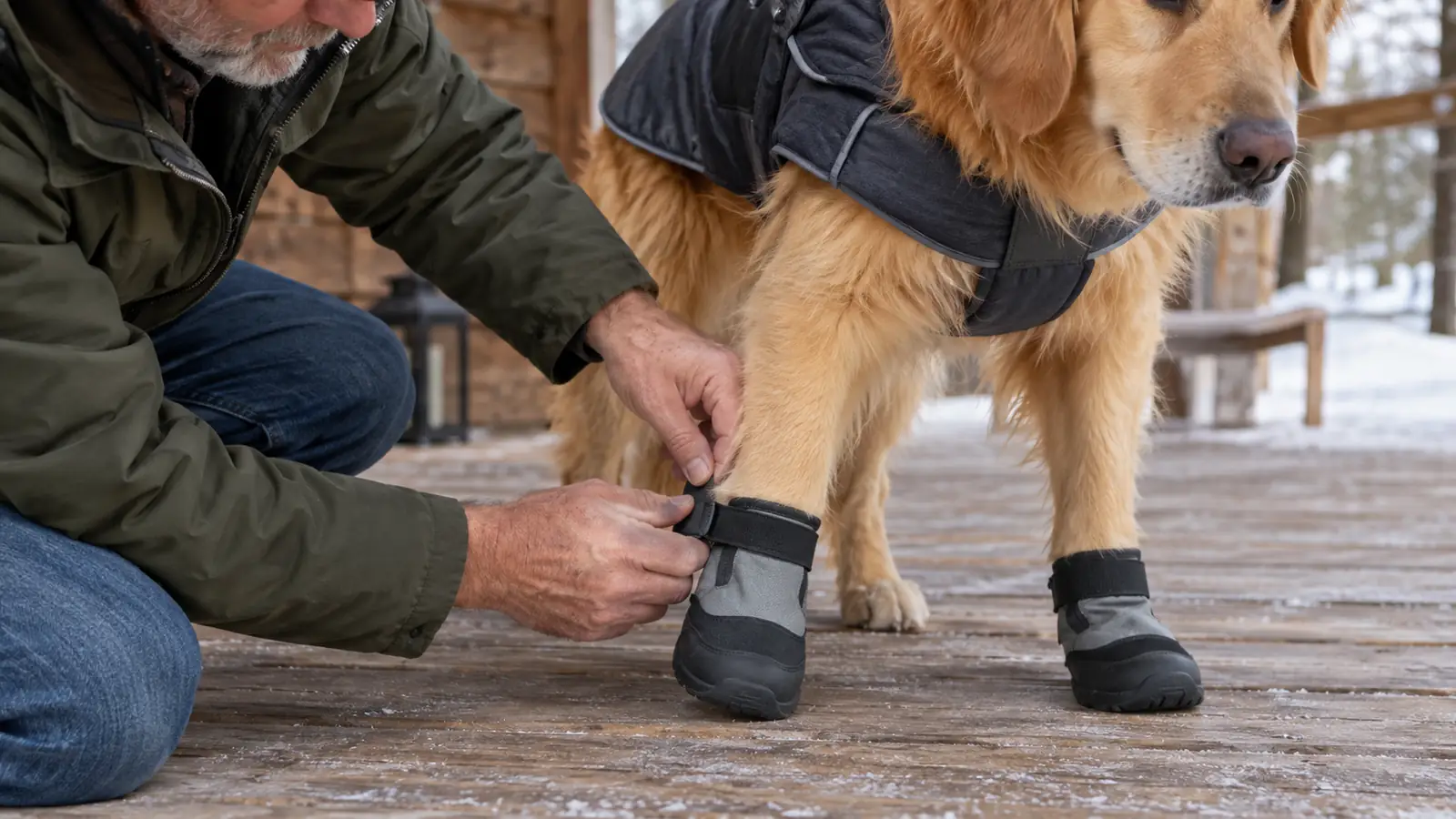
The set comes with four boots, each with reflective strips and a hook-and-loop strap. I put them on Pip before we left the house, checked them before we crossed the first salted street, and took them off the second we got home. That was the routine for every snowy or salted morning from mid-December through March.
The fit is worth talking about because it is the difference between boots that stay on and boots that end up lost in a snowbank. I measured Pip's front paw while he was standing, back of the heel to the tip of his longest toe, and matched that number to the size chart in the listing. The size I ordered had about a thumb's width of room at the toe, and the strap closed around his ankle without leaving a gap. On our first fitting, I made the mistake of leaving the straps too loose. He took two steps and one boot spun sideways. I tightened each strap until I could just fit two fingers between the strap and his leg, and after that, they did not spin.
Our morning walk is a one-mile loop on a neighborhood trail, about twenty-five minutes. I put the boots on in the same order every day, front left, front right, back left, back right, so I could check each strap twice. On the mornings when we were rushing, Pip would sometimes try to trot away between boots, and I would scoop him up and start over. The routine became part of our winter rhythm, and by January I could do it without thinking.
The first morning I actually needed them was a Tuesday, about a week after they arrived. The temperature was eighteen degrees, and the city had salted the sidewalks the night before. I put the boots on Pip, stepped out, and waited for the high-step. It came, but after about a block, he seemed to decide that walking on the salted concrete was better than dancing. He did the whole loop, and his paws were dry and clean when we got home. That was the moment I knew the boots were going to work.
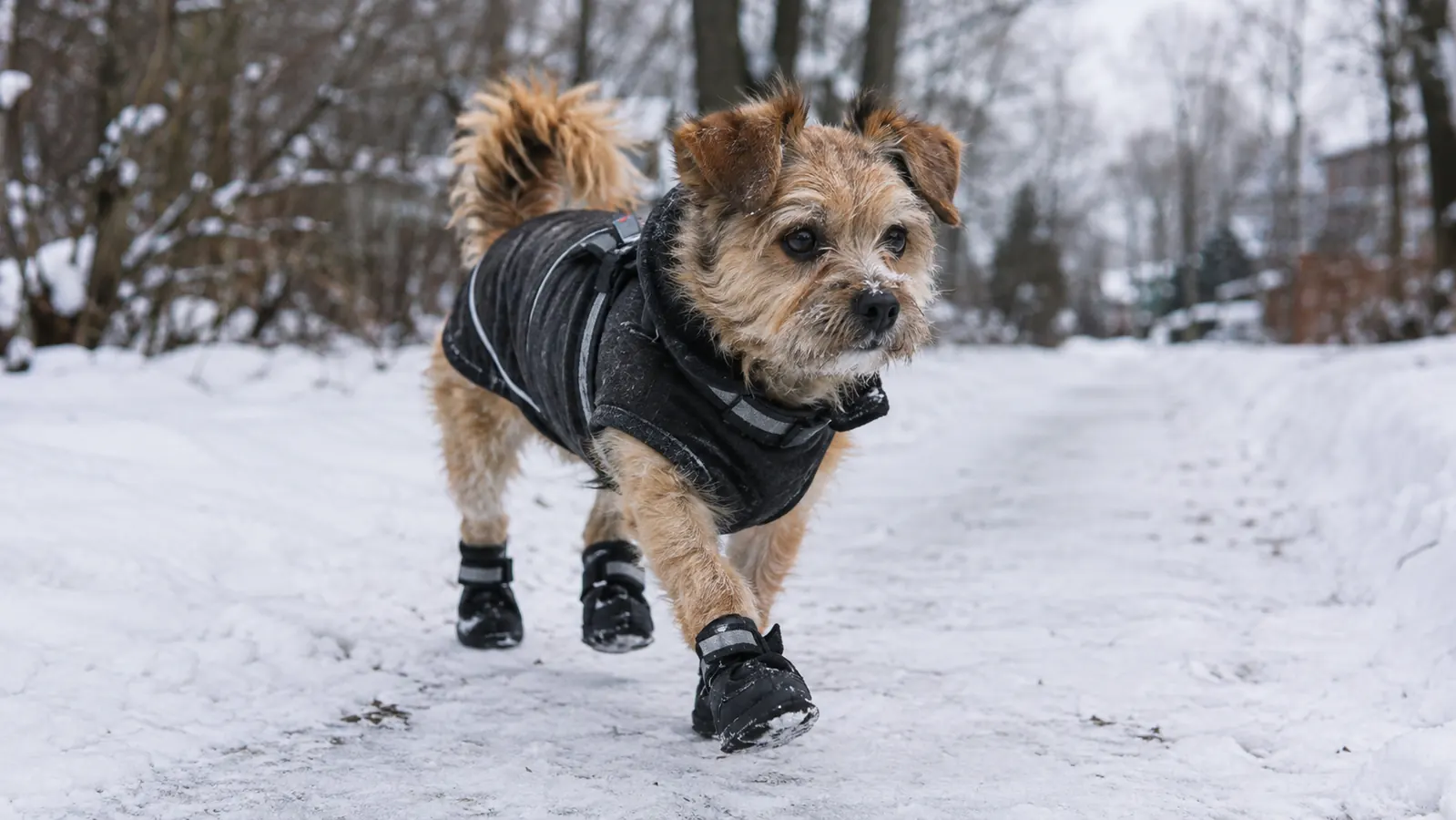
I will be honest about the first few tries. Pip walked like a pony who had never seen a field. He lifted each foot way too high, stopped to stare at his own paws, and gave me a look that said I had ruined his life. The high-step lasted about three walks. By the fourth morning he was trotting along like the boots had always been there.
What Nobody Tells You About the First Week
Every review I read mentioned the high-step, so I was ready for that. What nobody told me is that the high-step is not the hard part. The hard part is the pause. Pip would take three steps, stop, lift one foot, put it down, and look at me. Then he would do it again. The first walk felt like an hour because we stopped so often.
The other thing nobody tells you is that you will question your purchase around day two. Pip refused to move at all on the second morning. I stood at the end of the driveway with a thirteen-pound dog who had apparently forgotten how legs work. I almost returned them. I am glad I did not, because by day four he was fine, but I want you to know that the rough patch is normal.
By the third morning, something shifted. Pip still paused at the end of the driveway, but instead of lifting his feet like a toy soldier, he took a few careful steps, then a few more. I remember the exact moment we crossed the first salted stretch: I was bracing for the frozen-paw stop, and he just kept walking. He did the entire loop without stopping once. That was the day I stopped thinking about returning them.
The high-step you hear about is real, but it is not dramatic. It is more like a dog who has never seen snow, lifting each foot high and placing it down gently. Pip did that for about three walks. After that, his stride was more normal, with only an occasional pause when the ground changed. The worst moment was the second morning, when he refused to move at all. I tried coaxing, I tried treats, I tried walking a few steps ahead. Nothing worked until I picked him up, carried him to the end of the driveway, and set him down in a patch of clean snow. He walked from there. I think the texture of the salt under the boots was confusing him, and he needed a clean starting point.
The high-step lasted about three walks. By the fourth morning he was trotting along like the boots had always been there.
How They Held Up Over the Winter
The QUMY boots got used on every snowy or salted morning from mid-December on. That is a lot of salt, a lot of slush, and a few genuinely deep snow days. The rugged soles held up with no visible wear. The hook-and-loop straps stayed strong, and the reflective strips still reflected after weeks of being wiped down with a damp cloth.
Pip's paws stayed dry in snow. That was the whole point, and the boots delivered. On the mornings when the trail was just wet but not snowy, I left the boots at home and used paw wax instead. The tin lives in my coat pocket. But on the days when the salt was out, the boots were the difference between a walk and a standoff.
One thing I want to be straight about: exactly once, a boot came off in deep snow. Pip was bounding through a drift and when he came out the other side, one boot was gone. I found it a few steps back, buried in the snow. It has never happened on a sidewalk or a packed trail, only in that one deep drift, but it did happen.
Let me tell you more about the lost boot, because it was the only real failure. We were on the trail after a six-inch snowfall, and Pip bounded into a drift that came up past his chest. When he came out the other side, one boot was gone. I walked back and found it a few steps back. The strap had come completely undone, which told me I had not tightened it enough that morning. After that, I made a point of checking every strap twice before we left the house, and it never happened again.
I washed the boots about every two weeks in the sink with warm water and a drop of dish soap, then left them to air dry on the rack. The salt stains came off easily, and the reflective strips stayed bright. The hook-and-loop straps never lost their grip, even after being soaked and dried repeatedly. The soles are made of a rugged rubber that showed no wear at all after a winter of daily walks, which surprised me because Pip is a light dog and I half expected the soles to be the first thing to go.
At the end of March, when the snow finally left and the sidewalks were just wet, I packed the boots into a plastic bin with the rest of Pip's winter gear. They still looked almost new. The only sign of use was a faint scuff on one sole from a day on rough gravel. I expect to use them again next winter, and given how they held up this one, I think they will last several more seasons.
One detail that surprised me was how much less Pip shivered when his paws were off the cold ground. He still shivered on the coldest days because he is an Italian Greyhound with almost no coat, which is why the Dogcheer coat goes on too. His paws came inside dry, with no salt packed between his pads. I am not claiming they are a heating pad, but they did seem to help him tolerate the walks better.
The Pros and Cons
What I Liked
- Paws stay dry in snow and slush
- Stayed on through normal walks, including salted sidewalks
- Reflective strips are genuinely visible in low light
- Hook-and-loop straps are easy to fasten, even with cold fingers
- Rugged soles showed no wear after a full winter
Where It Falls Short
- The high-step phase is real, and it lasts about three walks
- One boot came off once in deep snow
- They are not for wet pavement; paws can slide on smooth wet surfaces
- Putting them on a wiggly dog takes practice
Who This Is For
Buy the QUMY boots if your dog refuses to walk on salted sidewalks. Buy them if you live somewhere with real snow and you are tired of carrying your dog over the bad patches. Buy them if your dog has thin paws, or if you simply want to stop the morning high-step dance before it starts. Pip is a thirteen-pound Italian Greyhound with almost no body fat, and if they work for him, they will work for most dogs who need paw protection.
Who Should Skip It
Skip the QUMY boots if your dog only needs protection from wet pavement, because paw wax is simpler and cheaper for that job. Skip them if your dog absolutely cannot tolerate anything on their feet, because the first few days will be rough. And skip them if you mostly walk on smooth indoor surfaces, because the soles are made for traction on snow and dirt, not polished floors.
If your dog only walks on grass or un-paved trails, you may not need these. They do have soles for a reason, and they will protect against thorns and rough gravel too, but the main draw is the salt. The boots also kept sharp ice and grit off his pads. If you live in a place that never sees salt, you could get away with paw wax.
What I Would Tell a Friend
If we were standing at the dog park and you asked me whether the QUMY boots are worth it, here is what I would say. They are the reason Pip and I kept our morning walks all winter. They are not perfect, and the first three days will test your patience. But if your dog does the frozen-paw stop on salted sidewalks, these boots fix the actual problem. That is more than I can say for most of the things I have bought for that dog.
If you are standing in the pet aisle trying to decide between these boots and a tub of paw wax, here is how I think about it. Paw wax is fine for light snow and short walks in the dry cold. But the moment the city salts the sidewalks, wax is not enough. Salt sticks to wax, and the wax can wear off halfway through a walk. Pip's paws would be wet and stinging within ten minutes. The boots create a physical barrier, and that is what you need when the ground is a chemical minefield. I still keep a tin of wax in my coat pocket for days when the ground is just cold, but the boots are the answer for real winter.
Here is the thing I tell everyone who asks about boots, and I almost did not believe it myself: the adjustment period is short, but you have to push through it. Day one, your dog will look ridiculous. Day two, your dog may refuse to move. If you give up on day two, you will never get to the part where the boots become invisible. Pip and I had our worst morning on day two, and by day four he was trotting past the same spot where he had planted himself, without a glance. The payoff is worth the patience. But you have to be willing to look like the person walking their dog in tiny boots for a few days.
I know dog boots seem like a silly expense when you first consider them. I thought so too. But then I added up how many mornings I had carried Pip across salted intersections, and how many times I had turned around halfway because he refused to go further. The boots paid for themselves in the first two weeks of walks we did not have to skip.
Give your dog's paws a break this winter
A full winter of salted sidewalks and the QUMY boots are still going strong. If your dog refuses to walk on salt, this is the set that got Pip moving again.
Amazon Check Today's Price on Amazon →